Best Montessori Toys for 2-Year-Olds in 2026: Tested and Reviewed
Product images are illustrative. Actual products may vary slightly in appearance.
What 2-Year-Olds Actually Need (Developmentally)
Before we get to the products, a quick look at what’s happening at this age — because the why matters more than the what.
Around 24 months, children are typically:
- Building vocabulary rapidly — from 50 words to 200+ in a few months
- Refining fine motor skills — threading, stacking, pouring, turning pages
- Craving independence — “me do it” is the motto
- Beginning pretend play — feeding dolls, “cooking,” imitating adults
- Developing spatial reasoning — where things fit, how things balance
The best toys for this age support these drives without over-directing them. No batteries, no flashing lights, no “correct” way to play.
[For a full age-by-age breakdown, see our guide: Montessori Toys by Age: 0–6 Years]
Our Picks: The Short Version
| Toy | Price | Best For | Rating |
|---|---|---|---|
| Grimm’s Rainbow Stacker | ~€45 | Open-ended play | 5/5 |
| Hape Pound & Tap Bench | ~€25 | Cause & effect + music | 4/5 |
| PlanToys Sorting Bus | ~€28 | Shape sorting + pretend | 4/5 |
| Melissa & Doug Wooden Building Blocks (100pc) | ~€20 | Construction + spatial reasoning | 5/5 |
| Lovevery The Enthusiast Play Kit | ~€120 | Curated Montessori subscription | 4/5 |
| Magna-Tiles Clear Colors (32pc) | ~€40 | Magnetic construction | 4/5 |
| Stockmar Beeswax Crayons (block) | ~€14 | First art materials | 5/5 |
| Wooden Knob Puzzle Set | ~€10 | Fine motor + vocabulary | 4/5 |
The Reviews
1. Grimm’s Rainbow Stacker — Best Overall
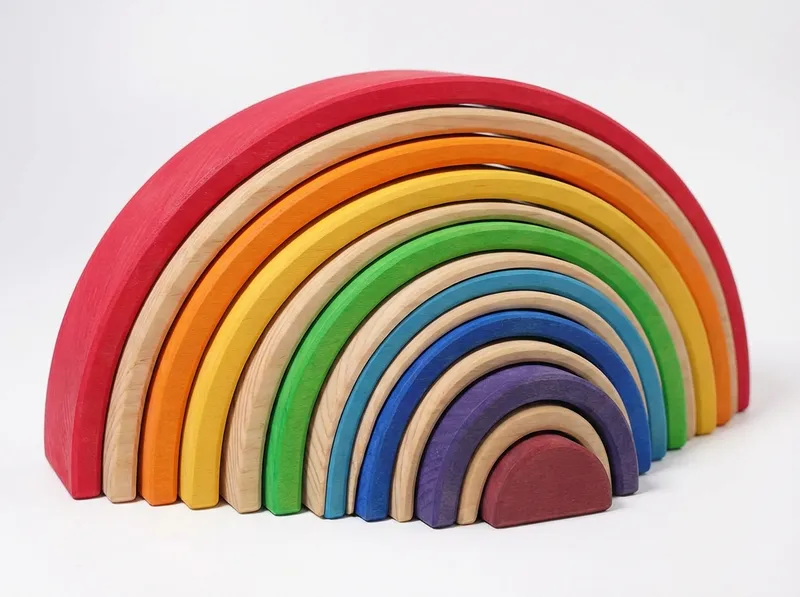
Price: ~€45 | Ages: 1–6+ | Materials: Lime wood, non-toxic water-based dyes
The Grimm’s Rainbow is an icon for a reason. Twelve arched pieces in a colour gradient that can become bridges, tunnels, fences, cradles, or whatever a two-year-old decides they are today. (We wrote a full Grimm’s Rainbow Stacker review if you want the deep dive.)
What we like:
- Truly open-ended — we’ve seen it used in dozens of ways
- Beautiful craftsmanship (hand-finished in Germany)
- Grows with the child — a one-year-old stacks them, a five-year-old builds entire cities
- Colour gradation introduces natural colour theory
- Durable enough to handle being thrown (and it will be thrown)
What we don’t:
- At ~€45, it’s a splurge. There’s no getting around that.
- The arches don’t stack perfectly flat, which can frustrate children who want precision
- Colours may vary slightly from batch to batch (handmade, so expected)
Who it’s for: Families who want one toy that genuinely lasts for years and value open-ended play over structured activities.
Who should skip: If your child prefers clear “right answers” in their play (some do, and that’s fine), a puzzle set might bring more joy. Also, if €45 on a single toy isn’t in the budget — the DIY alternative below works brilliantly.
Budget alternative: Stack pool noodles cut into arches, or use rolled-up towels. Not as pretty, but the play pattern is the same. Also look at generic wooden rainbow stackers on Amazon (€15–20) — the quality differs, but the play value is similar.
2. Hape Pound & Tap Bench with Slide-Out Xylophone
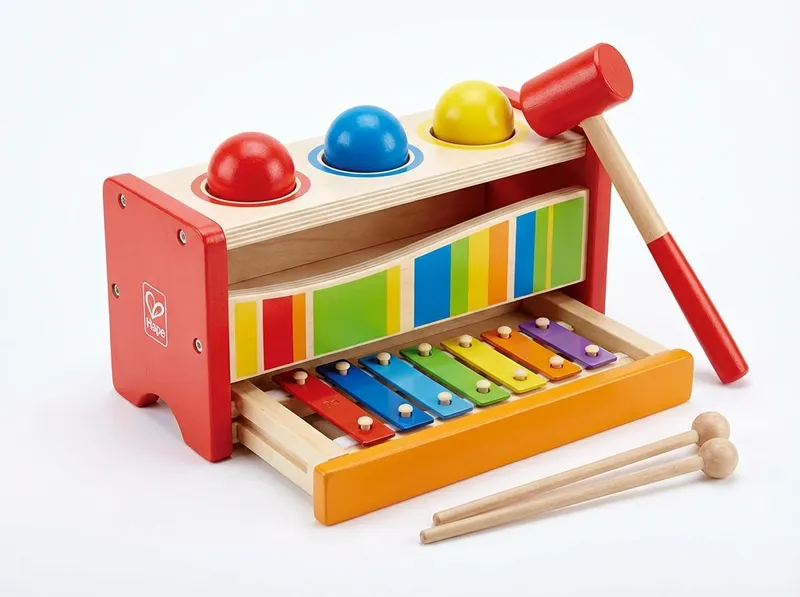
Price: ~€25 | Ages: 12 months–3 years | Materials: Wood, metal xylophone keys, non-toxic paint
A two-in-one: hammer balls through holes on top, and they roll over the xylophone below creating music. The xylophone also slides out for standalone play.
What we like:
- Cause and effect is immediately satisfying — pound, hear music
- The xylophone actually produces pleasant tones (not all toy instruments manage this)
- Builds hand-eye coordination and wrist strength
- Sturdy construction — Hape’s quality control is consistently good
- Two play modes in one toy
What we don’t:
- It’s not truly “Montessori” in the purest sense — it isolates cause-and-effect well, but the dual function can be distracting for some children
- The hammer and balls create noise — something to consider if you work from home
- Limited open-ended potential compared to blocks or a rainbow stacker
Who it’s for: Children who love banging things (most of them) and parents who want a toy that feels like a toy while still being developmental.
Who should skip: If your child is sensitive to noise, or you’re specifically looking for quiet independent play materials, this one stays in the cupboard during nap time.
3. PlanToys Sorting Bus
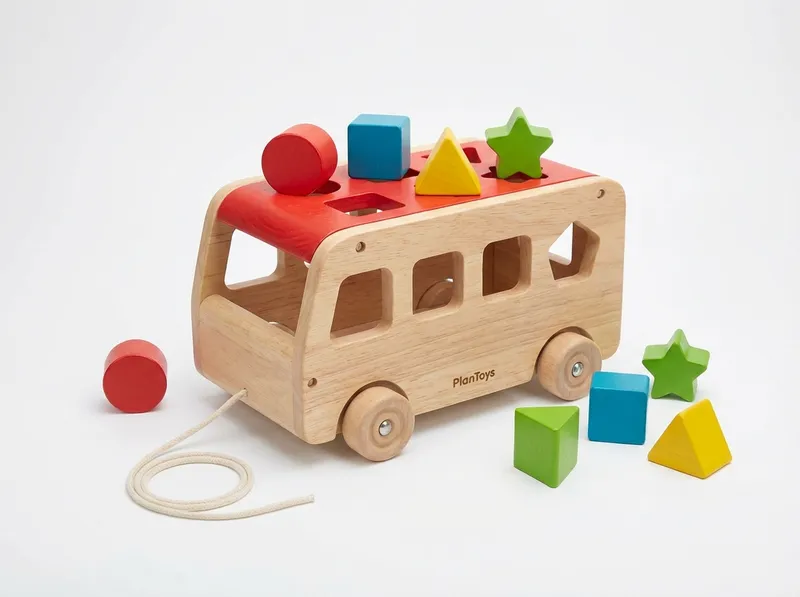
Price: ~€28 | Ages: 18 months–3 years | Materials: Rubberwood, non-toxic water-based dyes, PlanWood
A shape sorter that’s also a pull-along bus. Three geometric shapes (circle, triangle, square) post through matching holes in the roof, and a panel on the side opens to retrieve them.
What we like:
- Shape sorting with only 3 shapes — not overwhelming for a 2-year-old
- The pull-along function adds gross motor play
- PlanToys’ sustainability credentials are genuine (reclaimed rubberwood, non-toxic dyes)
- The side panel opening teaches a secondary mechanism
- Thoughtfully sized for small hands
What we don’t:
- Only 3 shapes may bore older/more advanced 2-year-olds quickly
- The pull cord could be longer for comfortable walking-and-pulling
- At €28, it’s mid-range for what is essentially a shape sorter with a string
Who it’s for: Children in the early sorting and shape-matching phase who also love things on wheels. Great as a first shape sorter.
Who should skip: If your child has already mastered basic shapes, this won’t challenge them for long. Move to a more complex puzzle set instead.
Budget alternative: A simple wooden shape sorter box (€8–12 on Amazon) does the core job. Add a string to any wheeled toy for the pull-along element.
4. Melissa & Doug Wooden Building Blocks (100-Piece Set)
Price: ~€20 | Ages: 2–6+ | Materials: Hardwood, solid colour paint
One hundred blocks in four colours and nine shapes. Nothing fancy, nothing gimmicky, incredibly effective.
What we like:
- Unbeatable value — €20 for 100 blocks of decent quality
- Teaches more maths and physics than almost any “educational” toy
- Completely open-ended — towers, houses, roads, bridges, sorting, counting
- Durable and well-sized for toddler hands
- Comes in a canvas bag for storage (a surprisingly useful detail)
What we don’t:
- Paint can chip after heavy use — some parents prefer unpainted blocks for this reason
- Not as premium-feeling as Haba or Grimm’s blocks
- A few blocks in each set may have rough edges (quality control varies)
Who it’s for: Every family. Seriously. If you buy one toy from this list, make it blocks. They’re a foundational Montessori material for a reason.
Who should skip: Nobody. At this price point with this developmental value, blocks are a no-brainer. If you want premium quality, look at Haba blocks (~€40–60 for a similar set).
5. Lovevery The Enthusiast Play Kit (22–23 Months)
Price: ~€120 per kit (subscription) | Ages: 22–23 months (age-specific) | Materials: Mixed — wood, fabric, silicone, paper
Lovevery delivers age-specific play kits to your door with a parent guide explaining each material’s developmental purpose. The 22-23 month “Enthusiast” kit includes items for pretend play, fine motor work, and early language.
What we like:
- Genuinely well-researched — each item maps to specific developmental milestones
- The parent guide is excellent — it teaches you alongside your child
- High-quality materials and design
- Removes decision fatigue — everything is curated and age-appropriate
- Items are designed to grow with the child beyond the initial age range
What we don’t:
- At ~€120 per kit (every 2–3 months), it’s a significant investment
- You can’t choose what’s included — some items may not suit your child’s specific interests
- Some of the included activities can be replicated with household items
- Subscription model means ongoing commitment
Who it’s for: Parents who value curation, are new to Montessori, or want a “done for you” approach with high-quality materials and parental education included.
Who should skip: Budget-conscious families (you can build a brilliant Montessori setup for less), or parents who enjoy selecting and curating materials themselves. Also skip if you’re already experienced with Montessori — the parent guide is less valuable to you, and many items will feel familiar.
6. Magna-Tiles Clear Colors (32-Piece Set)
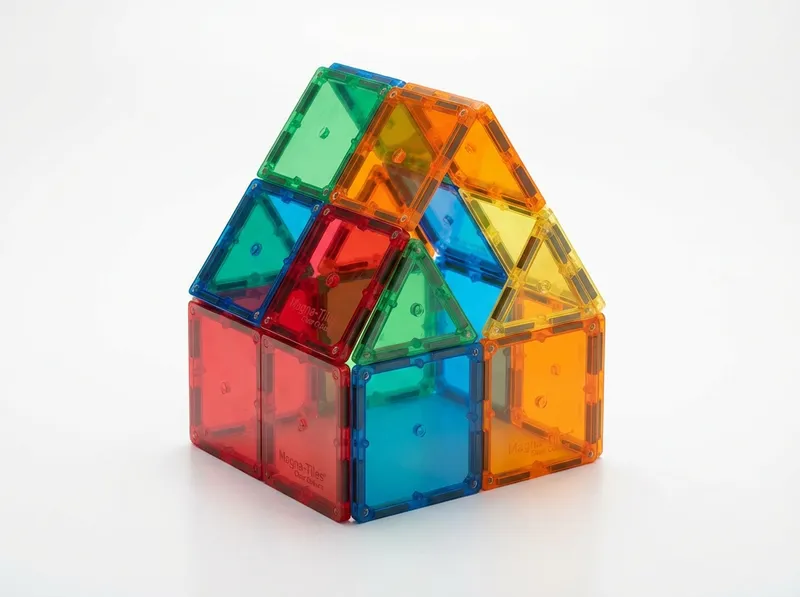
Price: ~€40 | Ages: 2–8+ | Materials: ABS plastic, magnets, BPA-free
Flat magnetic tiles that snap together to build 3D structures. Squares and triangles in translucent colours.
What we like:
- Magnetic connection is forgiving — easier to build with than standard blocks at this age
- Translucent colours are beautiful on a light table or near a window
- Introduces geometry naturally — children discover that 2 triangles make a square
- Huge longevity — genuinely used from age 2 through primary school
- Compatible with many other magnetic tile brands for expansion
What we don’t:
- They’re plastic — not the natural material Montessori purists prefer
- €40 for 32 pieces means you’ll likely want to buy more sets (the 32-piece starter can feel limited)
- Magnets can weaken over time with heavy use
- Competing brands (Picasso Tiles, Connetix) offer similar quality at lower prices
Who it’s for: Families who want a construction toy with serious staying power and don’t mind plastic when the play value justifies it.
Who should skip: If natural materials are non-negotiable for you, or if you want to start with a smaller investment, try wooden blocks first and add magnetic tiles later.
Budget alternative: Picasso Tiles (€25–30 for a comparable set) are widely considered a strong alternative at a lower price point.
7. Stockmar Beeswax Crayons (Block Set of 8)
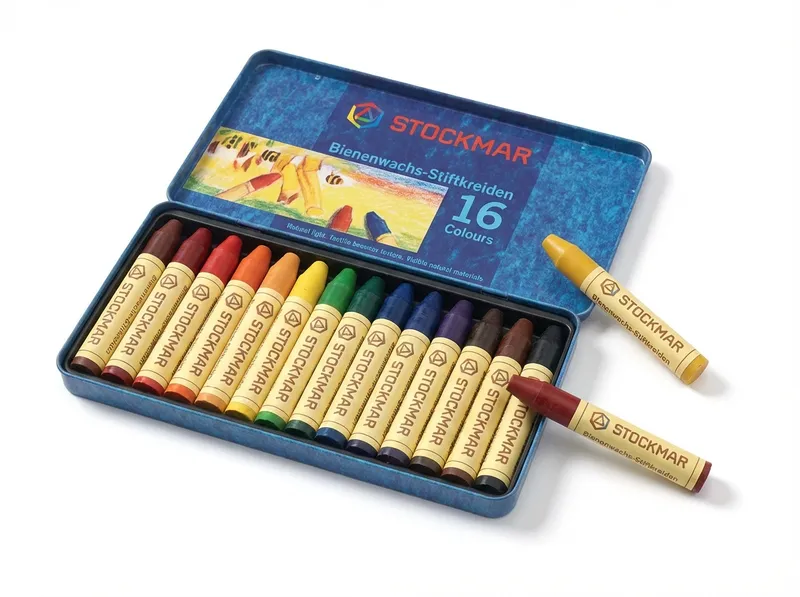
Price: ~€14 | Ages: 18 months+ | Materials: Beeswax, non-toxic pigments
Block-shaped crayons made from beeswax. They smell incredible, lay down rich colour, and are practically indestructible.
What we like:
- The block shape is perfect for toddler fists — no fine grip needed yet
- Won’t break when dropped (or sat on, or thrown)
- Beeswax is naturally non-toxic — peace of mind for the mouthing stage
- Colours are rich and blend beautifully
- They smell amazing (yes, this matters when a two-year-old is holding them to their face)
What we don’t:
- Only 8 colours in the basic set
- They don’t produce the fine lines older children might want (by design, but worth noting)
- At €14 for 8 crayons, they’re pricier than standard wax crayons
Who it’s for: Any family with a young mark-maker. These are the best first crayons we’ve found, full stop.
Who should skip: If your child is already past the block crayon stage and wants to draw details, move to Stockmar stick crayons or quality coloured pencils.
8. Wooden Knob Puzzles (Set of 3–4)
Price: ~€10 for a set | Ages: 18 months–3 years | Materials: Plywood, non-toxic paint
Simple puzzles where each piece has a small knob for gripping. Themes typically include animals, vehicles, fruits, or shapes — one object per cutout.
What we like:
- The knobs train the three-finger grip used later for writing (pencil grip!)
- One-to-one matching builds vocabulary — name each piece as you play
- Immediate self-correction — the piece fits or it doesn’t
- Affordable enough to have several and rotate them
- Quick wins build confidence
What we don’t:
- Quality varies hugely between manufacturers — some knobs fall off
- Children master them quickly — you’ll need to move to jigsaws within months
- Not very open-ended — there’s one way to complete them
Who it’s for: Children developing their pincer grip and building vocabulary. Excellent for the 18–30 month window specifically.
Who should skip: If your child already does 6+ piece jigsaw puzzles, these will bore them. Move on to more complex puzzles or tangram-style challenges.
Budget alternative: IKEA often stocks simple wooden puzzles for €3–5. The quality is basic but adequate for the short period they’re developmentally relevant.
The Bottom Line
You don’t need all eight of these. If we had to equip a two-year-old’s shelf with just three items from this list, we’d choose:
- Wooden blocks (€20) — the workhorse
- Stockmar crayons (€14) — for creative expression
- Grimm’s Rainbow (€45) or a set of knob puzzles (€10) — depending on budget
That’s €34–79 for a genuinely solid Montessori-aligned setup. Add a few practical life activities from around the house (pouring beans between jugs, sponge squeezing, sock matching) and you’re well ahead of any child drowning in a mountain of plastic. For tips on displaying these beautifully, see our guide to setting up a Montessori shelf.
[Want to understand the philosophy behind these choices? Read: What is Montessori? A No-Nonsense Guide for Curious Parents]
Exploritori Rating
Best Montessori Toys for 2-Year-OldsFAQ
What’s the single best Montessori toy for a 2-year-old?
If we had to pick one: wooden blocks. They’re affordable, endlessly versatile, and teach spatial reasoning, balance, counting, sorting, and cooperative play. A 100-piece set of unit blocks (~€20) will be used daily for years.
Are expensive Montessori toys worth it?
Sometimes. The Grimm’s Rainbow (€45) genuinely lasts from age 1 to 6+ and sees daily use — that’s excellent cost-per-play value. The Lovevery subscription (€120/kit) is harder to justify purely on materials, though the parent education component adds value. For most families, a mix of a few quality pieces and budget alternatives works best.
What about screen-free “learning tablets” marketed as Montessori?
We’d skip them. The Montessori approach prioritises hands-on, sensory-rich experiences with real materials. A tablet — even one without a screen — typically directs play rather than allowing the child to lead. Blocks, puzzles, and practical life activities do the job better.
How many toys should a 2-year-old have on their shelf?
Aim for 6–10 items, rotated every 1–2 weeks. This prevents overwhelm, keeps things fresh, and helps your child engage more deeply with each material. Store the rest out of sight and bring them back when interest wanes in the current selection.
Can I buy Montessori toys second-hand?
Absolutely — and we’d encourage it. Quality wooden toys hold up beautifully second-hand. Check local marketplaces, charity shops, and parent groups. Sand down any rough spots, clean with a damp cloth, and they’re good as new. It’s better for the environment and your wallet.
What about plastic toys? Are they ever okay in a Montessori setup?
Montessori doesn’t have a strict “no plastic” rule — that’s a common misconception. Natural materials are preferred because they offer richer sensory feedback (weight, temperature, texture), but a well-designed plastic toy like Magna-Tiles earns its place through genuine play value. Focus on the purpose and quality of the toy, not just the material.
Where curiosity leads, learning follows. ✨
Frequently Asked Questions
What toys are best for a 2-year-old’s development?
Open-ended wooden toys that encourage problem-solving and fine motor skills: stacking toys, shape sorters, simple puzzles (4-8 pieces), threading/lacing activities, and basic building blocks. Avoid battery-operated toys that do the playing for the child.
How many toys should a 2-year-old have?
Less is more. Montessori recommends rotating 6-8 toys on accessible shelves, rather than overwhelming children with dozens. Rotate every 1-2 weeks to maintain interest and challenge.
Are expensive Montessori toys worth it?
Not always. Some premium brands like Grimm’s offer exceptional quality and longevity, but many affordable alternatives work just as well. Focus on natural materials, good craftsmanship, and open-ended play potential rather than brand name.
What should I avoid when buying toys for a 2-year-old?
Avoid: battery-operated toys that flash and beep, toys with only one way to play, plastic characters from media franchises, and anything with small parts (choking hazard). Look for: natural materials, multiple uses, child-led play, and age-appropriate challenge.
 Get weekly Montessori tips
Honest reviews, activity ideas, and budget-friendly picks — no spam, just what works.
Subscribe Free