15 Montessori Sensory Activities for Toddlers (Using Stuff You Already Have)
Why Sensory Activities Matter
Toddlers learn through their senses before they learn through instruction. Touch, smell, sound, sight, and yes — taste (everything goes in the mouth, we know) are how they build their understanding of the world.
In Montessori terms, sensory exploration is foundational. The classic Montessori sensorial materials — pink tower, brown stair, colour tablets — were all designed to isolate and refine specific senses. At home, you don’t need those materials. You need intention and whatever’s in your cupboards.
These activities work for children roughly 12-36 months, though most can be simplified for younger toddlers or extended for older ones. Watch your child and adjust.
Touch and Texture
1. Mystery Bag
What you need: A cloth bag (pillowcase works) and 5-6 household objects with different textures — a wooden spoon, a sponge, a pinecone, a smooth stone, a rubber ball, a piece of fabric.
How it works: Your child reaches in without looking and tries to identify objects by touch alone. For younger toddlers, start by letting them explore the objects first with both hands and eyes, then transition to the bag.
What it builds: Stereognostic sense (identifying objects by touch), vocabulary, concentration. For a ready-made tactile option, the Baby Paper Crinkle Sensory Toy (~$7) with high-contrast black-and-white patterns is excellent for younger toddlers.
2. Texture Walk
What you need: Scraps of different materials taped or laid on the floor — bubble wrap, sandpaper, felt, a towel, foil, fake grass.
How it works: Barefoot walking across different textures. Some toddlers will love this; others will be cautious. Both responses are fine. Never force a child onto a texture they dislike.
What it builds: Tactile awareness, body awareness, sensory vocabulary (“rough,” “smooth,” “bumpy”).
3. Dough Play
What you need: Flour, salt, water, oil. Basic salt dough recipe: 2 cups flour, 1 cup salt, 1 cup water, 1 tablespoon oil.
How it works: Kneading, rolling, poking, tearing, squishing. Add dried herbs for smell (rosemary and lavender work well). Add food colouring if you don’t mind the mess. If you prefer a ready-made option, Play-Doh Starter Set (~$10) is non-toxic and comes in a good range of colours.
What it builds: Hand strength (crucial for later writing), bilateral coordination, sensory regulation. Heavy dough work is deeply calming for many toddlers.
Sound
4. Sound Matching
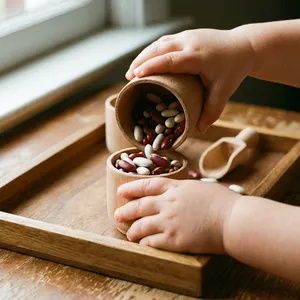
What you need: 6 identical small containers (film canisters, spice jars, or small tupperware) filled in pairs — two with rice, two with dried beans, two with coins.
How it works: Shake each container and match the ones that sound the same. Start with just two pairs for younger toddlers. Make the sounds obviously different at first, then gradually more similar. If you want a ready-made bead-and-sound option, the Hape Double Bubble Bead Maze (~$22) offers tactile and auditory feedback in one.
What it builds: Auditory discrimination, matching and pairing, concentration.
5. Kitchen Orchestra
What you need: Pots, pans, wooden spoons, metal spoons, plastic containers, cardboard tubes.
How it works: Let them bang. Yes, it’s loud. But they’re discovering that different materials make different sounds, that force changes volume, and that rhythm exists. That’s physics, music theory, and cause-and-effect in one chaotic session.
What it builds: Auditory awareness, cause and effect, gross motor skills, rhythm.
6. Nature Sound Walk
What you need: A walk outside and willing ears.
How it works: Walk slowly. Stop frequently. Ask “what can you hear?” Even pre-verbal toddlers can point toward sounds. Birds, wind, traffic, water, footsteps on gravel versus pavement. Name what you hear together.
What it builds: Auditory attention, vocabulary, mindfulness (yes, toddlers can be mindful — they’re often better at it than adults).
Smell
7. Spice Exploration
What you need: 4-5 spices from your kitchen — cinnamon, vanilla, mint, basil, cumin.
How it works: Place a small amount of each on separate plates or in small jars. Let your child smell each one. Name them. Notice reactions — most toddlers have strong opinions about smells.
What it builds: Olfactory awareness, vocabulary, preference expression.
8. Scented Water Transfer
What you need: Two bowls, a sponge or small jug, and water with a few drops of food-safe scent — vanilla extract, lemon juice, or mint tea.
How it works: Standard water transfer (Montessori practical life classic), but the scent adds a sensory layer. They’re practising pouring or sponging while their nose is engaged too.
What it builds: Fine motor control, concentration, olfactory awareness, practical life skills. For more pouring activities, see our Practical Life guide.
Sight
9. Colour Sorting with Household Items
What you need: A muffin tin (or small bowls) and a collection of small coloured objects — buttons, LEGO bricks, pom poms, coloured pasta, crayons.
How it works: Sort by colour into the compartments. Start with 2-3 colours for younger toddlers, add more as they master it.
What it builds: Visual discrimination, colour recognition, fine motor skills (picking up small objects), categorisation.
10. Light and Shadow Play
What you need: A torch (flashlight) and a dark room.
How it works: Shine the torch on the wall. Make shadows with hands and objects. Let your toddler hold the torch and discover they can control where the light goes. Tape coloured cellophane over the torch for coloured light.
What it builds: Cause and effect, spatial awareness, visual tracking, wonder (genuinely — toddlers find this magical).
11. Nature Collection and Sorting
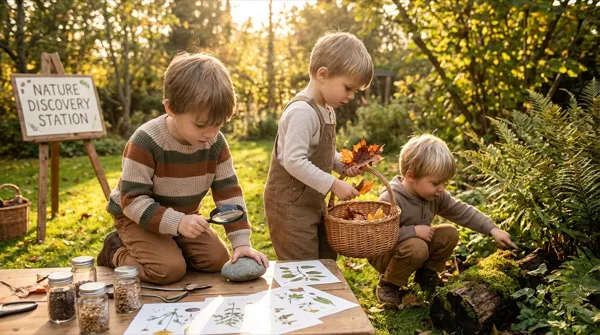
What you need: A basket and whatever you find outside — leaves, sticks, stones, flowers, seed pods.
How it works: Collect on a walk. Sort at home by type, size, colour, or texture. Arrange by size from small to large. Compare textures. This is the Montessori sensorial curriculum in its most natural form.
What it builds: Visual discrimination, categorisation, vocabulary, connection to nature. See our Outdoor Montessori Activities for more ideas like this.
Taste (Yes, Intentionally)
12. Taste Testing
What you need: Small pieces of different safe foods — something sweet (banana), sour (lemon), salty (cracker), bitter (dark chocolate or cucumber).
How it works: Offer each taste. Watch their face. Name the taste. “That’s sour!” Most toddlers will want to try the sweet one seventeen more times. That’s fine.
What it builds: Gustatory awareness, vocabulary, food openness, decision-making.
13. Herb Garden Tasting
What you need: A few herbs — fresh basil, mint, parsley, rosemary.
How it works: Smell first, then taste a small piece. Even if they spit it out (they will), they’ve explored it. Growing herbs on a windowsill adds the long-term dimension of watching something grow before tasting it.
What it builds: Connection between growing and eating, sensory vocabulary, fine motor skills (picking leaves).
Multi-Sensory
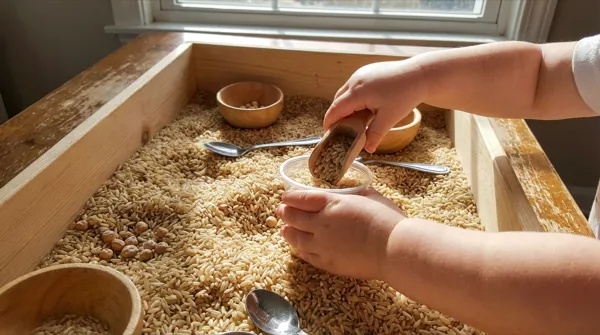
14. Rice or Pasta Sensory Bin
What you need: A shallow container, dry rice or pasta, and small tools — cups, spoons, funnels, small toys to hide. For an upgrade that never dries out, Kinetic Sand (~$12) is a popular moldable alternative (ages 3+).
How it works: Scooping, pouring, burying, finding. Add colour by dyeing the rice with food colouring and vinegar (let it dry overnight). Add scent with a few drops of essential oil if you like.
Montessori purist note: Sensory bins aren’t strictly Montessori — they don’t isolate a single sense. But they’re excellent for regulation, exploration, and extended concentration. Use them and don’t feel guilty about it.
What it builds: Fine motor skills, sensory exploration, concentration, independent play. The Fat Brain Toys Squigz 75-Piece Set (~$35) is a popular structured alternative — suction cups that stick to surfaces and each other. Especially valuable for children with sensory processing differences — see our guide on Montessori for Neurodivergent Children.
15. Washing Station
What you need: Two small basins, warm water, a bar of soap, a brush, and something to wash — vegetables, toy animals, smooth stones, shells. For outdoor water play, the Step2 Rain Showers Splash Pond Water Table (~$55) is a sturdy option that extends this kind of sensory play.
How it works: Wash the objects. That’s it. The warm water, the soap (touch and smell), the scrubbing motion (proprioceptive input), the visual change from dirty to clean — it hits almost every sense.
What it builds: Practical life skills, fine motor strength, sensory integration, independence, concentration. This is Maria Montessori’s practical life philosophy at its best — real work, real purpose, real engagement.
Tips for Success
Follow the child’s interest. If they want to spend 20 minutes on the rice bin and skip the sound matching, let them. Concentration is the goal, not completing a checklist.
Embrace the mess. Lay down a towel or do messy activities in the bathtub or outside. Fighting the mess fights the learning.
Name what they’re experiencing. “That feels smooth.” “That sounds loud.” “That smells like cinnamon.” You’re building sensory vocabulary even before they can repeat the words.
Rotate activities. Don’t put all 15 out at once. Three to four at a time, rotated weekly, keeps things fresh without overwhelming.
Safety first. Supervise activities with small objects (choking hazards) for children under 3. Know your child — if they still put everything in their mouth, choose larger items or food-safe materials only.
FAQ
At what age can I start sensory activities?
From birth, technically. Newborns benefit from different textures, sounds, and visual contrasts. The activities in this list are designed for 12-36 months, but many can be simplified for younger babies (supervised texture exploration, sound exposure, visual tracking).
My toddler just wants to dump everything. Is that a sensory activity?
Yes, actually. Dumping is exploring gravity, cause and effect, and the properties of materials (how do rice grains behave differently from wooden blocks?). Let them dump. Then model how to scoop it back up. The cleanup is the activity too.
Are sensory bins Montessori?
Not traditionally, no. Montessori sensorial materials are designed to isolate one sense at a time. Sensory bins engage multiple senses simultaneously. But Maria Montessori was a scientist who adapted her methods based on observation. If a sensory bin engages your child in extended, focused exploration, it’s serving the same purpose.
How long should a toddler spend on a sensory activity?
However long they’re engaged. Some activities will hold attention for 2 minutes. Others for 20. Both are fine. Never force extension of an activity they’re done with, and never interrupt deep concentration to move to the next thing.
What if my child has sensory sensitivities?
Go slowly. Offer materials without pressure. Let them observe before touching. Some children need to watch you interact with a texture several times before they’ll try it themselves. Never force sensory contact. For more on adapting for sensory differences, see our guide on Montessori for Neurodivergent Children.
 Get weekly Montessori tips
Honest reviews, activity ideas, and budget-friendly picks — no spam, just what works.
Subscribe Free