Montessori Spring Activities for Toddlers: 15 Ideas for the Best Season of All
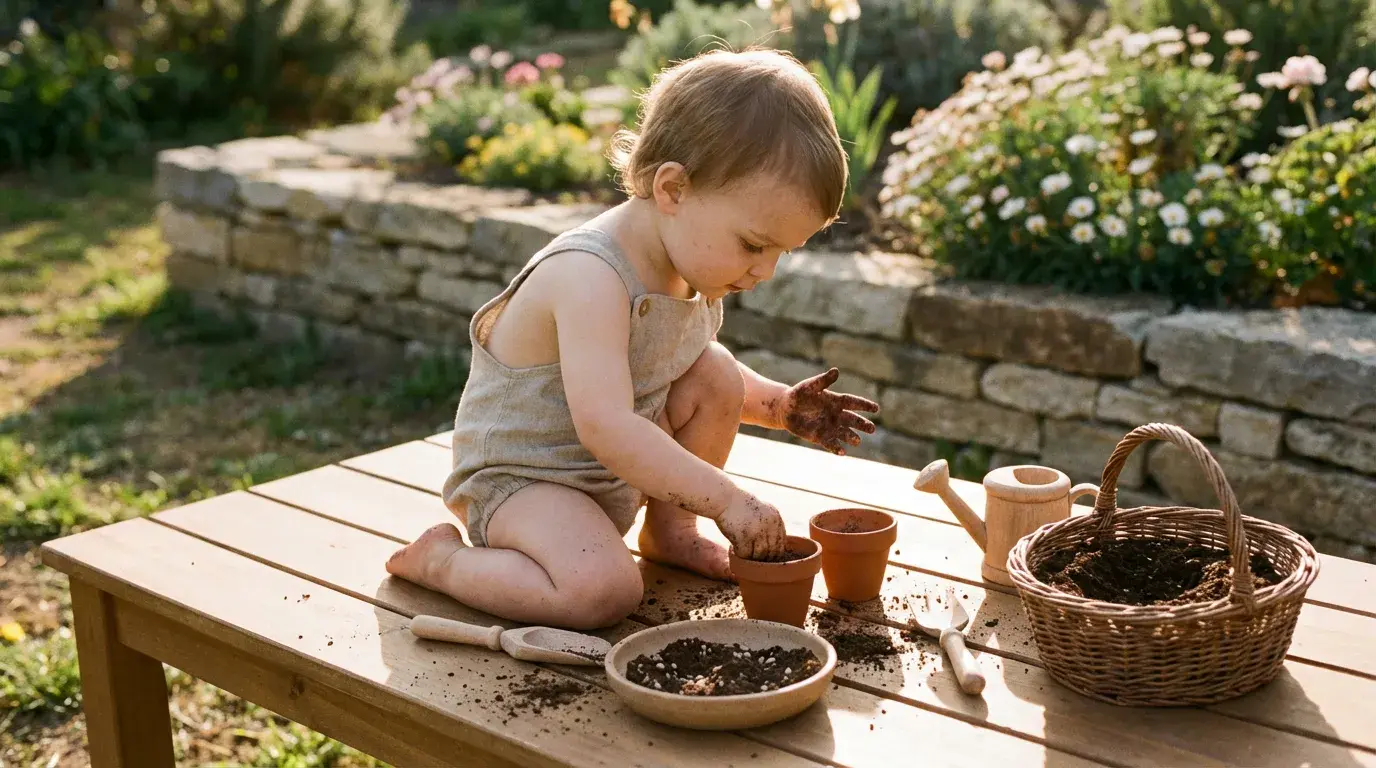
Spring is genuinely the best season for Montessori work with toddlers. Not because you need anything special — but because the world outside suddenly provides everything.
Seeds to plant. Flowers to arrange. Rain to splash in. Worms to observe. Mud to dig, petals to sort, birds to listen for. The prepared environment already exists. You just have to open the door.
Maria Montessori didn’t design her curriculum for indoor shelves and wooden toys alone. She wrote extensively about children gardening, caring for living things, and working in the natural world. Spring is when that vision becomes effortless to implement at home.
Here are 15 activities — from full-hour projects to five-minute enrichment moments — organised by theme. Nearly all of them cost nothing.
For the broader seasonal picture, see our Outdoor Montessori guide. For rainy spring days, the Sensory Activities and Practical Life Activities posts have you covered indoors.
Spring Gardening
1. Seed Planting in Terracotta Pots
Age: 18 months+
What you need: Small terracotta pots, potting soil, easy seeds (sunflowers, beans, or nasturtiums all sprout reliably fast), a small trowel or spoon, a child-sized watering can.
How it works: Fill the pots together — let your toddler scoop and pour the soil. Make a hole with one finger (demonstrate the depth — about one knuckle for beans). Drop the seed in. Cover gently. Water carefully. Put in a sunny spot and check every day.
Why it works: This is Montessori practical life at its most natural. The sequence is clear: prepare, plant, water, wait. The feedback is real: the seed either grows or it doesn’t. When a bean sprout appears after five days, the look on a toddler’s face is something you’ll remember.
Sunflowers are ideal for impatient toddlers — they germinate in a week and grow visibly fast. Beans are fascinating because they’re big enough to handle easily. Nasturtiums reward neglect and produce edible flowers (yes, really).
For equipment worth investing in: the Melissa & Doug Slice & Dice Vegetable Set ($15) pairs well with harvest season later — but for actual planting tools, the COOLJOY Kids Gardening Set ($18) has real metal mini-tools with a wooden handle. Durable, correctly sized for ages 2-5, and they don’t break on first use.
What they’re building: Care for living things, sequencing, practical motor skills, patience, responsibility.
2. Window Germination (Bean in a Bag)
Age: 2 years+
What you need: A clear zip-lock bag, damp kitchen paper, a dried bean (any type), masking tape, a sunny window.
How it works: Fold the damp paper to fit inside the bag. Place the bean between the paper and the bag’s transparent side. Tape the bag to the window so the bean is visible. Check daily. Watch roots emerge first (usually day 3-4), then the shoot (day 5-7). Once it’s sprouting, transplant to soil.
Why it works: This is a live science experiment in your kitchen. Nothing explains a seed like watching one open. The fact that the root goes down before the shoot goes up is a daily revelation. You can discuss it without any teaching vocabulary — the child sees it, notices it, and asks about it.
Keep a simple observation journal: a sheet of paper where they draw what they see each day. Even pre-writing toddlers will mark the paper. It teaches that observation is worth recording.
What they’re building: Scientific observation, attention to change, vocabulary (root, shoot, germinate), patience.
3. Herb Garden Setup
Age: 2 years+
What you need: Small pots, potting mix, herb seedlings (not seeds — seedlings are more immediately satisfying and grow faster). Basil, mint, chives, and parsley all work. A sunny windowsill or balcony.
How it works: Let your toddler pot each herb. Water them. Taste a leaf from each — mint and basil are usually strong enough reactions to be memorable. Use the herbs in cooking together (see our Kitchen Activities guide).
The extended project: A herb garden is a long-term care activity. Watering becomes a daily routine. Pinching back leaves to encourage growth teaches cause and effect. Harvesting for cooking closes the loop between caring and eating.
What they’re building: Responsibility, sensory vocabulary, connection between growing and eating, fine motor skills.
Flower Work
4. Flower Arranging
Age: 18 months+
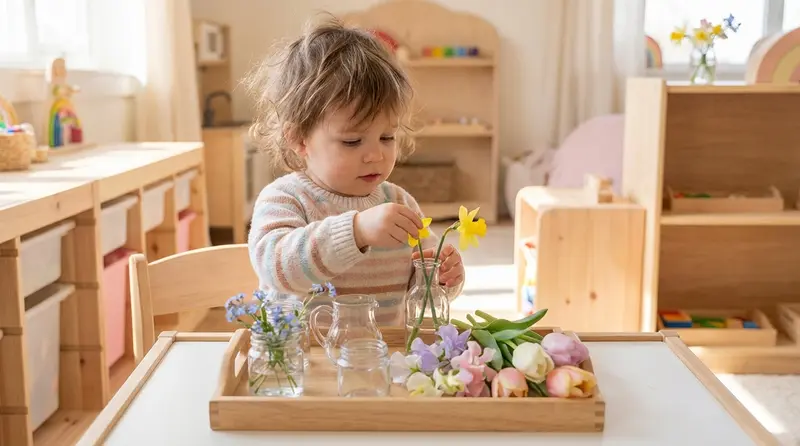
What you need: Fresh-cut flowers (from a shop, a garden, or a walk), a small stable vase, a small pitcher of water, a tray to contain spills.
How it works: Set up the tray with the empty vase, the flowers, and the pitcher. Demonstrate: pour water into the vase, trim a stem if needed (scissors for 3+), place the flower. Then let your child arrange.
This is a classic Montessori practical life activity. The focus is process, not product. A toddler’s arrangement might be six flowers all jammed into one side of the vase. That is correct. It’s the work of arranging that matters, not the aesthetic outcome.
If fresh flowers feel wasteful, dandelions and wildflowers from a walk are perfect. Free, plentiful, and children are proud to arrange something they gathered themselves.
For the workspace: A small plastic tray with a lip is ideal — any kitchen tray works. The Learning Resources Serving Tray (~$12) is sized right and has the high edges toddlers need to catch spills without making it feel like an obstacle.
What they’re building: Fine motor control (pouring, stem placement), concentration, aesthetic appreciation, practical life sequencing.
5. Petal Sorting and Pressing
Age: 2 years+
What you need: Fallen petals or wildflowers gathered on a walk, a tray with divided sections (or small bowls), a heavy book for pressing.
How it works: Sort petals by colour, size, or texture. Then choose favourites and press them between two sheets of paper inside a heavy book. Wait a week. Open carefully. The pressed flowers are real and beautiful — a toddler’s first art that outlasts the afternoon.
What they’re building: Colour discrimination, sorting, fine motor skills, patience, connection to nature.
6. Watering the Garden
Age: 15 months+
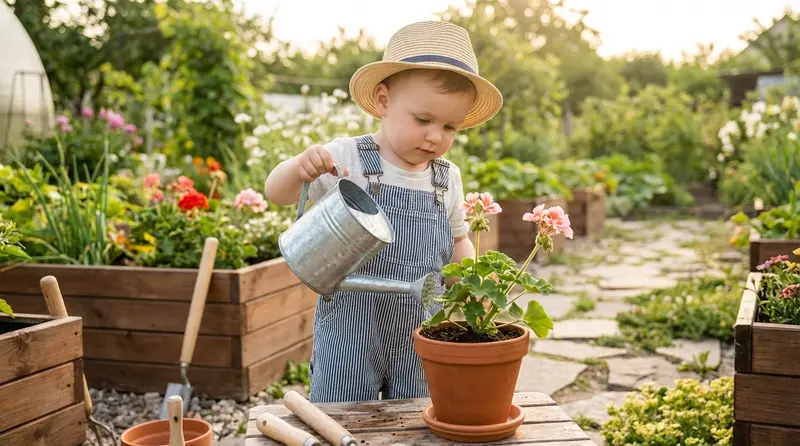
What you need: A child-sized watering can (metal or plastic — both work, but metal teaches weight and real consequence). A plant or two that actually needs water.
How it works: Fill the watering can together. Walk to the plants. Water them. This is it. This is the activity.
What makes it Montessori isn’t the watering — it’s the responsibility. This plant needs water to live. Your child is the one who gives it. That’s a real job with real stakes. Over time, they’ll notice what wilted plants look like, and understand their role in preventing it.
The Green Toys Watering Can (~$14) is good for 18 months+ — made from recycled plastic, just the right size, bright colour. For ages 3+, a small metal watering can is more realistic and teaches them to handle real tools responsibly.
What they’re building: Responsibility, cause and effect, practical life, care for living things.
Spring Sensory Activities
7. Spring Sensory Bin
Age: 12 months+
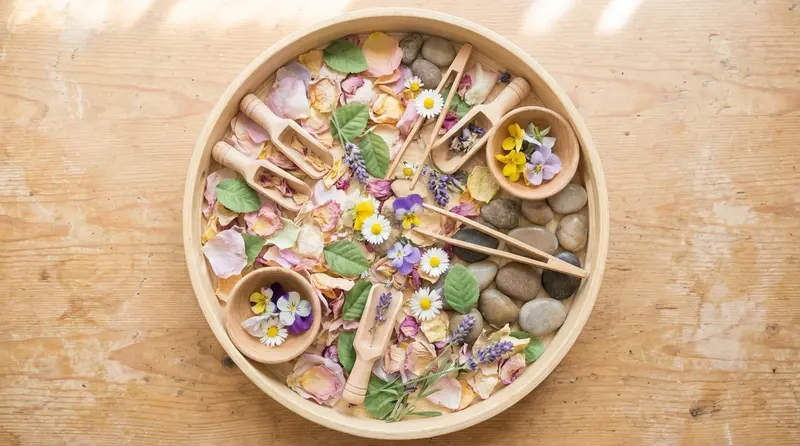
What you need: A shallow container, a base material (brown rice, sand, or soil), and spring items: flower petals, small stones, a few acorn cups, dried seeds, small sticks. Add child-sized scoops, cups, and a small funnel.
How it works: Set it out. Step back. Let them explore.
The value of a sensory bin isn’t in structured play — it’s in the unstructured investigation. What does this feel like? What happens when I scoop it? Can I fill this cup? Can I pour it into that one?
Spring variation: Change the materials as the season progresses. April’s bin (catkins, soil, dried petals) looks different from May’s (grass cuttings, dandelion heads, water beads). The ritual of changing the bin teaches children that the world changes with the seasons.
What they’re building: Sensory exploration, fine motor skills, independent play, seasonal awareness.
8. Mud Kitchen / Mud Soup
Age: 18 months+
What you need: Soil, water, old pots and spoons, leaves, sticks, petals, grass, a plastic tub or corner of the garden. Old clothes mandatory.
How it works: This needs no instructions. Give a toddler dirt, water, and something to stir, and they’ll cook. Add ingredients from the garden — a leaf here, a flower there. The “soup” is never for eating (usually), but the concentration is real.
Why it works: Messy, outdoor sensory play is deeply regulating for many children. The proprioceptive input of digging and stirring, combined with the sensory richness of mud, can calm an overtired or overstimulated child faster than almost anything else.
The Montessori angle: Mud play develops exactly the fine motor movements that Montessori practical life activities target — pouring, scooping, measuring, transferring. The materials are just less polished than a wooden tray and ceramic pitcher. The learning is the same.
If you want to formalise this, a dedicated mud kitchen stand is one of the more useful outdoor Montessori investments. The Step2 Naturally Playful Sandbox with Cover (~$60) provides a contained outdoor sensory space that works for mud play, water play, and nature sorting year-round.
What they’re building: Sensory exploration, creative play, sensory regulation, motor skills.
9. Nature Sound Walk
Age: All ages
What you need: Just yourselves and some slow walking.
How it works: Go outside. Stop. Ask: “What can you hear?” Bird calls, wind in trees, rain on leaves, distant traffic, bees. Walk slowly. Stop again. Ask again.
This is mindfulness for toddlers, without the word “mindfulness.” It teaches auditory attention — noticing what’s there rather than filtering it out. It also builds vocabulary: “That’s a robin. That sound is wind through the leaves. Those are bees buzzing.”
The observation game: Can they hear three different birds? Can they hear something far away and something close? Can they hear something moving?
What they’re building: Auditory discrimination, vocabulary, mindfulness, connection to nature.
Spring Science and Observation
10. Butterfly Life Cycle Tray
Age: 2.5 years+
What you need: Printed or drawn cards showing egg — caterpillar — chrysalis — butterfly, or a wooden/plastic life cycle set. If you can catch a caterpillar (or order butterfly kits), better still.
How it works: Lay out the four stages. Tell the story together — what happens in each stage, how long it takes, what the caterpillar eats. If you’re using printed cards, let your child sequence them themselves after you’ve shown the order once.
The extension: In spring, look for caterpillars on nettles, cabbages, and hedgerow plants. Observe the real thing. The abstraction (card sequencing) becomes meaningful when connected to a real caterpillar outside.
The Insect Lore Butterfly Garden (~$32, caterpillars ordered separately ~$18) is the best home version we know of. Children watch caterpillars eat, grow, form a chrysalis, and emerge as painted ladies. It takes 3-4 weeks from caterpillar to butterfly. The release at the end is ceremonial.
What they’re building: Scientific understanding, sequencing, care for living things, vocabulary.
11. Bird Feeder and Observation Journal
Age: 2 years+
What you need: A simple bird feeder (or make one from a pinecone, peanut butter, and birdseed), a window with a view, paper and crayons.
How it works: Set up the feeder. Wait. When birds come, draw them together — not to create art, but to record observation. What colour was it? Was it big or small? Did it come alone? Keep the drawings in a small notebook. Look back after a few weeks.
This connects to literacy: dictate what the child tells you about the bird, and write it under their drawing. Their observation becomes words on paper. That’s early writing, without any drilling.
What they’re building: Observation, descriptive vocabulary, early literacy concepts, patience.
12. Worm and Mini-Beast Study
Age: 2 years+
What you need: A damp patch of garden, a magnifying glass, small containers if you want to observe more closely (release everything after).
How it works: Dig up a small patch of damp soil or lift a stone or log. What lives there? Worms, woodlice, beetles, centipedes, slugs. Observe carefully. Name what you find. Count the legs. Notice the movement. Discuss what it eats and where it lives.
The critical bit: Handle with care and release everything. This teaches respect for living creatures — a core Montessori value that goes beyond the activity itself.
A Bug Catcher Kit with Magnifier (~$12) is useful if you want to observe without holding — the magnifier tube lets children see details without the insect escaping.
What they’re building: Scientific curiosity, vocabulary, respect for living things, fine motor control.
Quick Practical Life for Spring
13. Washing Muddy Boots
Age: 18 months+
What you need: Muddy wellies, a bucket of water, a scrubbing brush, old towels.
How it works: After a muddy walk, set up a washing station. Show how to scrub mud from the boots. Let them do it. The visible progress (boots getting cleaner) is deeply satisfying, and cleaning up after outdoor time teaches that outdoor work has a natural conclusion.
What they’re building: Practical life self-care, sequencing, care of belongings.
14. Collecting and Sorting Nature Treasures
Age: 18 months+
What you need: A basket for collecting, a sorting tray or muffin tin at home.
How it works: On any walk, collect. Stones, feathers, seed pods, conkers, interesting sticks, dried berries. Bring them home. Sort by type, size, or texture. Line stones up by size from small to large. Compare weights. Feel different bark textures.
This is the Montessori sensorial curriculum outdoors and for free. The materials change with every walk. The sorting and classifying skills are the same ones built by the wooden sorting trays inside.
What they’re building: Visual discrimination, sorting and classification, vocabulary, connection to nature.
15. Ribbon Weaving on a Garden Fence or Stick Frame
Age: 3 years+
What you need: A simple square frame made from sticks and string, or a section of garden fence, plus ribbons, strips of fabric, long grass, or willow.
How it works: Thread strips over and under the vertical strings of the frame. This is weaving in its simplest form — no loom required, no complexity. The toddler weaves in real materials from the garden (long grass, thin branches, bark strips) alongside colourful ribbons.
Why it matters: Weaving is bilateral hand coordination, sequencing, pattern recognition, and fine motor control in one activity. It’s also visually beautiful. The stick frame becomes a spring decoration.
What they’re building: Bilateral coordination, sequencing, creative expression, concentration.
A Quick Overview
Spring Activities at a Glance
| Activity | Min Age | Duration | Indoors / Out |
|---|---|---|---|
| Seed planting | 18m | 20 min | Both |
| Bean germination bag | 2y | 5 min + daily check | Indoors |
| Herb garden setup | 2y | 30 min | Both |
| Flower arranging | 18m | 10–20 min | Indoors |
| Petal sorting & pressing | 2y | 15 min | Indoors |
| Watering the garden | 15m | 5–10 min | Outdoors |
| Spring sensory bin | 12m | Open-ended | Both |
| Mud kitchen | 18m | Open-ended | Outdoors |
| Nature sound walk | All ages | 15–30 min | Outdoors |
| Butterfly life cycle | 2.5y | 20 min+ | Indoors |
| Bird feeder + journal | 2y | Ongoing | Both |
| Worm & bug study | 2y | 15–30 min | Outdoors |
| Washing muddy boots | 18m | 10 min | Outdoors |
| Nature treasure sorting | 18m | 20 min | Both |
| Ribbon weaving | 3y | 30 min+ | Both |
How to Introduce These Without Overwhelm
The Montessori principle here is simple: follow the season, not a curriculum.
You don’t need to do all 15. You don’t need to rotate them on a schedule. You need to notice what’s happening outside — seeds appearing in shops, birds returning, mud drying, flowers opening — and connect those things to your child’s hands.
Start with one outdoor activity this week. Seed planting takes 15 minutes and a few euros of supplies. Put the pot on the kitchen windowsill where it’ll be visible. Water it together every morning. When it sprouts — and it will — you’ve done something worth doing.
Add more as the season unfolds. Spring is long enough.
FAQ
When can toddlers start gardening?
From around 12-15 months, children can participate in simple gardening: pouring water from a small can, patting soil, carrying small handfuls of compost. Real planting (seeds in pots, pressing soil down) is accessible from 18 months with supervision. By 2.5-3, most children can manage the full sequence of planting, watering, and caring for a pot independently.
What are the easiest seeds for toddlers?
Sunflowers, beans (any variety), and nasturtiums. All three are large enough for toddlers to handle easily, germinate within a week, and grow visibly fast. Sunflowers are particularly good because they produce one large flower that children can follow from seed to towering plant. Avoid tiny seeds (carrots, basil) until children have more fine motor control.
Is flower arranging really Montessori?
Yes — it’s a classic Montessori practical life activity, included in most Montessori primary classrooms from age 3. The activity develops pouring control (water to vase), fine motor precision (placing stems), visual discrimination (selecting flowers), and care of the environment. Maria Montessori considered flower arranging and table setting as equivalent in importance to reading preparation. The goal is purposeful, real work — and arranging flowers is exactly that.
My toddler just pulls up everything they plant. What do I do?
This is completely normal, especially under 2.5. Pulling is exploring cause and effect. Redirect gently: “The seed needs to stay underground to grow. Let’s put it back and check on it tomorrow.” Having a “digging pot” — a dedicated container they can dig freely — helps. And some toddlers will destroy more than they grow for a full season before the care instinct kicks in. That’s fine. The doing matters more than the result.
Are spring activities safe for children who put things in their mouths?
Most spring activities are mouth-safe with supervision. Soil, flower petals, seeds, and leaves are generally not dangerous in small quantities (though always confirm specific plants aren’t toxic — elderberries, yew berries, and foxglove are common UK/European garden plants that are harmful). Choose edible herb gardens and food-safe seeds (sunflowers, beans) when working with children who are still mouthing. Never give access to treated soils or pesticide-sprayed plants.
How do I keep the momentum going when spring is busy?
The activities that work best are the ones embedded in existing routines. Watering plants takes two minutes and can happen every morning. Noticing birds happens on the school run. Collecting stones happens on any walk. You don’t need blocks of time — you need noticing. Start there, and the longer activities happen naturally on slower days.
Where curiosity leads, learning follows. ✨
 Get weekly Montessori tips
Honest reviews, activity ideas, and budget-friendly picks — no spam, just what works.
Subscribe Free