What Makes a Toy Montessori? 9 Signs to Look For Before You Buy
· Updated
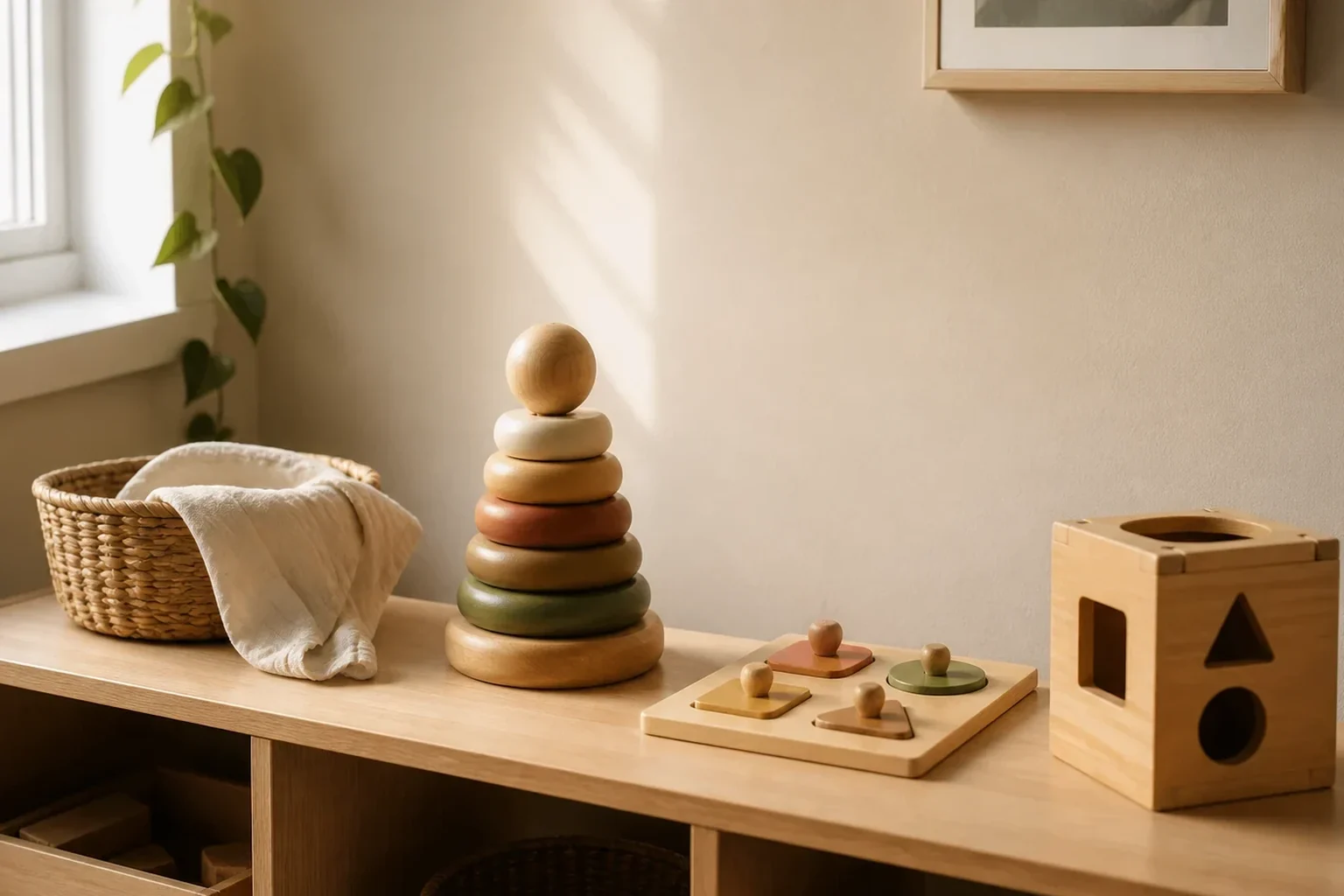 Walk through any toy store or scroll Amazon for five minutes and you’ll see the same phrase everywhere: Montessori toy.
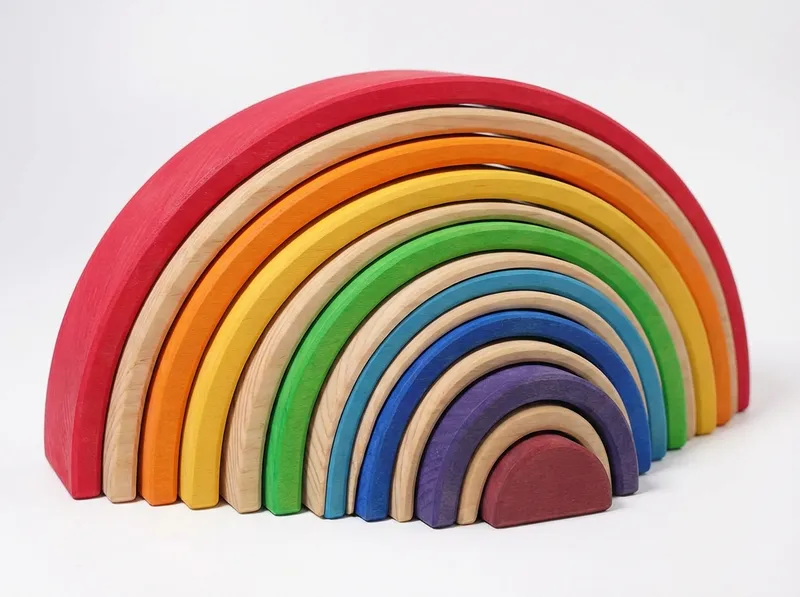
Wooden rainbow stacker? Montessori. Beige silicone puzzle? Montessori. A toy with leaves printed on the box and no batteries? Apparently Montessori too.
This is where a lot of parents get stuck. You want to buy fewer, better toys. You want toys that support concentration, independence, and real skill-building. But “Montessori” gets used so loosely that it stops meaning anything.
So let’s make it simple.
A toy is not Montessori because it’s wooden, expensive, neutral-coloured, or sold by a brand with nice typography. A toy is Montessori when it matches how children actually learn: through real purpose, clear feedback, hands-on exploration, and independent use.
If you’re wondering what actually counts, these are the signs that matter.
Quick choice guide
| Situation | Best starting point | Why it helps |
|---|---|---|
| You want the simplest option | Start with one low shelf or basket | Fewer choices make it easier for your child to focus |
| You are buying something new | Choose practical, open-ended materials first | They last longer and support real independence |
| Your space feels cluttered | Rotate materials weekly instead of adding more | Calm environments usually work better than bigger collections |
The 60-second shop-floor test
Before a toy goes into your basket, look past the packaging and try this in order:
| Ask | A promising answer | Pause if… |
|---|---|---|
| What is the child meant to practise? | One visible action: fit, pour, stack, sort, carry, fasten | The box lists a parade of unrelated skills |
| Can they tell whether it worked? | The piece fits, the order is visible, or the real task is complete | It needs a sound, light, or adult praise to announce success |
| Is it ready for this child? | The first step is achievable and there is a little room to grow | It needs constant rescue, or is already beneath their interest |
| Can it live somewhere usable? | It has a tray/basket home and can be returned with help | It will join a loose pile of parts or a crowded toy box |
If you get three or four promising answers, it is worth a closer look. If the toy fails the first two, save your money—even if it is made of beautiful wood.
🌱 First, a quick reality check: Montessori is not a toy aesthetic
Montessori began as an educational method, not a product category.
Maria Montessori observed that children learn best when they can work independently with materials that isolate a skill, give clear feedback, and connect to real life. That means many of the best Montessori activities are not toys at all. They are pouring water, peeling a banana, polishing a mirror, buttoning a shirt, sweeping crumbs, or matching real objects.
So when we ask, “is this a Montessori toy?” the better question is:
Does this material help your child practise a real developmental skill in a calm, focused, self-directed way?
That question will save you far more money than any marketing label ever will.
🧩 1. It has one clear purpose
The best Montessori materials usually do one thing well.
A ring stacker teaches size grading and hand control. A shape puzzle teaches visual discrimination and spatial fit. A child-sized broom supports sweeping. The material is not trying to teach colours, numbers, alphabet, animal sounds, and Spanish vocabulary all at once.
That “one thing at a time” design matters because it helps your child focus. When a toy does too much, your child has to sort through extra noise before they can get to the actual skill.
Good signs
- One obvious action or challenge
- A clear beginning and end
- Your child can understand what to do just by looking or after one slow demonstration
Red flags
- Lights, sounds, songs, and multiple buttons competing for attention
- Ten unrelated features squeezed into one toy
- The adult has to explain the toy over and over
A classic example is a simple wooden knob puzzle. It asks one question: where does this piece fit? That’s enough.
Takeaway: If a toy needs a sales paragraph to explain why it is educational, it’s probably doing too much.
🪵 2. It supports active use, not passive entertainment


Montessori materials invite your child to do something. They do not perform for your child.
This is one of the clearest differences between Montessori-style toys and many mainstream toys. A Montessori-aligned toy asks for movement, judgment, repetition, and effort. A passive toy gives instant stimulation with the press of a button.
Children can certainly enjoy both. This isn’t about moral purity. It’s about what kind of play builds deeper concentration.
A toy that lights up and congratulates your child for almost anything can be exciting in the short term, but it often short-circuits persistence. A material that waits quietly for your child to act creates a very different kind of engagement.
Ask yourself
- Does the toy respond mainly to your child’s effort?
- Or does it entertain them whether they do much or not?
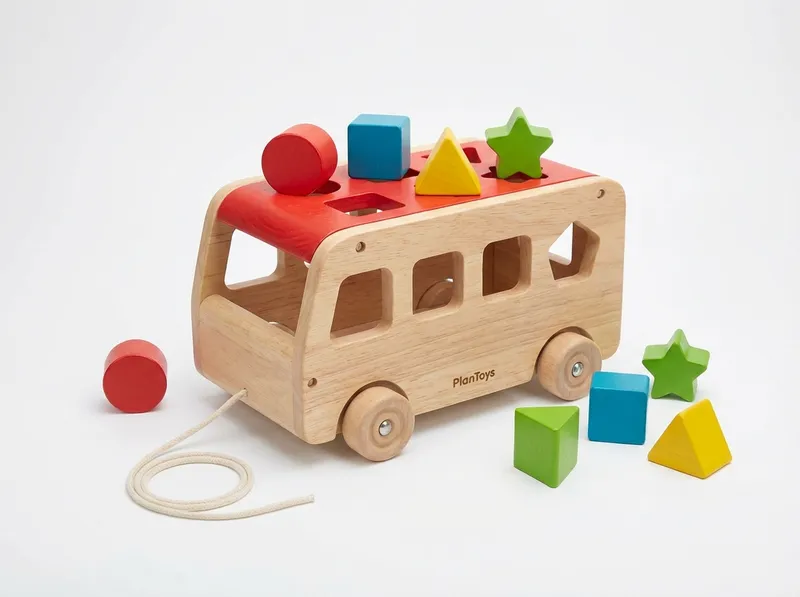
A shape sorter works because your child has to rotate, test, notice, and try again. The toy stays quiet. The thinking comes from the child.
Takeaway: Montessori toys are usually powered by your child, not by batteries.
👀 3. It has a built-in “control of error”
This sounds very Montessori-jargony, but the idea is simple.
A good Montessori material lets your child see for themselves whether something worked.
If a puzzle piece doesn’t fit, they notice. If water spills while pouring, they see it. If the cylinder goes in the wrong hole, it sits too high or won’t go in. The material gives feedback without an adult constantly stepping in to say “no, not like that.”
That matters because self-correction builds confidence. Your child starts to rely on observation instead of adult approval.
Examples of built-in feedback
- Puzzle pieces only fit one spot
- Stacking rings show size order visually
- Dressing frames work only when the button actually goes through the hole
- Pouring work shows instantly whether the hand movement was controlled
This is one reason Montessori materials can feel “calm”. The lesson is inside the object. You don’t need to narrate every second.
If you’re looking for a simple starter material with clear feedback, a ring stacker with graduated sizes is still excellent when the sizing difference is obvious enough for your child to see and correct.
Takeaway: The best materials teach by showing, not by congratulating.
👐 4. It matches your child’s developmental stage
A toy can be beautifully made and still be wrong for your child right now.
This is where many well-meaning Montessori purchases go sideways. Parents buy a toy because it looks educational, but the challenge is either too low or too high.
When a material is too easy, your child gets silly with it, throws it, or ignores it. When it’s too hard, they get frustrated and avoid it. The sweet spot is a material that asks for just enough effort to feel satisfying.
Rough examples by stage
- Around 12-18 months: posting, simple stacking, object permanence, basic cause and effect
- Around 18-24 months: spooning, simple puzzles, opening and closing, matching, early practical life work
- Around 2-3 years: tongs, scissors, more precise sorting, dressing skills, more complex puzzles
- Around 3-4 years: sequencing, early pre-math, more elaborate practical life, classification, language-rich materials
This is also why narrow age bands matter so much. “Toddler toy” is often too broad to be useful.
For a more specific shortlist, use our Montessori toys by age guide rather than buying a set labelled for a huge age range. A toy can be beautifully designed and still arrive six months too early.
If you’re shopping for a younger toddler, a sturdy object permanence box can be wonderful. For an older toddler, it may feel babyish within weeks.
Takeaway: A Montessori toy is not just about design. It is about fit.
🧺 5. It encourages independence
This is the heart of Montessori.
A good material lets your child take it, use it, and put it away with as little adult help as possible. That usually means the toy is manageable in size, not overly complicated, and stored accessibly.
A gorgeous toy that lives on a high shelf, needs six setup steps, or has twenty loose parts that only you can organise does not support independence very well, even if it looks the part.
Signs a toy supports independence
- Your child can carry it safely
- The steps are visible and manageable
- Clean-up is possible for their age
- It lives in a basket or tray with everything needed
This is why practical life tools are so Montessori even when they are not sold as toys. A small pitcher, a child-sized brush, or a learning tower often does more for independence than another shelf full of “educational toys”.
Takeaway: If your child cannot realistically use it without you hovering, it may not be the best Montessori fit yet.
🎯 6. It is made from real, sensory-rich materials, but wood is not the whole story
Let’s deal with the wooden elephant in the room.
Are Montessori toys always wooden? No.
Wood is common because it has weight, texture, warmth, and durability. It feels real in the hand. It does not flash or scream. Those are good qualities.
But wood is not a magic spell.
A badly designed wooden toy is still a badly designed toy. And some excellent Montessori-style tools are metal, glass, cotton, ceramic, or silicone because those materials serve the activity better.
A child-sized metal watering can may be more useful than a wooden pretend watering can. A real cotton cloth is better for table washing than a plastic rag. A glass pitcher can be appropriate with supervision because it gives authentic sensory feedback and invites careful movement.
Better question than “is it wooden?”
Ask: does the material feel real, purposeful, and pleasant to use?
If yes, good. If it also happens to be wood, lovely.
A small child-sized watering can or a wooden dressing frame toy may both work beautifully, but for different reasons.
Takeaway: Wooden is often helpful. It is not the definition.
🚫 7. It is not overloaded with fantasy, branding, or adult ideas of “cute”
This one can be a bit controversial, so let’s keep it practical.
Montessori tends to prefer reality-based materials, especially for younger children. That means real animals before cartoon animals, real tools before exaggerated pretend versions, realistic pictures before highly stylised ones.
Why? Because young children are still building their map of the real world. Clarity helps.
This doesn’t mean your child can never own a unicorn or a dinosaur in sunglasses. Relax. It just means that if your goal is Montessori-style learning, reality usually serves the developmental purpose better.
The same goes for heavy branding. A toy covered in TV characters, catchphrases, and visual clutter often pulls attention away from the actual task.
Better choices for younger children
- Realistic animal figures
- Clear, simple illustrations
- Functional practical life tools
- Toys without character branding splashed across them
If you’re building out a small shelf, a set of realistic animal figures often has more long-term Montessori value than a loud branded electronic toy.
Takeaway: Simple and reality-based tends to age better, focus better, and teach more clearly.
🔄 8. It invites repetition instead of quick novelty
If your child uses a toy once and then forgets it, that’s usually not a great Montessori sign.
Montessori children repeat work. They pour the water again. They fit the cylinders again. They button and unbutton again. Repetition is not boring to them. It is how mastery happens.
A good Montessori-style toy makes repetition feel worthwhile because there is a skill to refine. The goal is not “seeing what it does.” The goal is doing it better.
Signs a toy supports repetition
- Your child returns to it without prompting
- The task gets smoother over time
- There is a small challenge to refine, not just a one-time surprise
- It still feels relevant after the unboxing excitement is gone
This is why simple practical life sets often outperform flashy toys over the long run. A child-sized cleaning set may not look thrilling to an adult, but many children come back to it constantly because it connects to real life and real competence.
Takeaway: Montessori value usually grows with repetition. Gimmick value disappears after the first week.
🛒 9. It fits into a calmer, smaller toy rotation
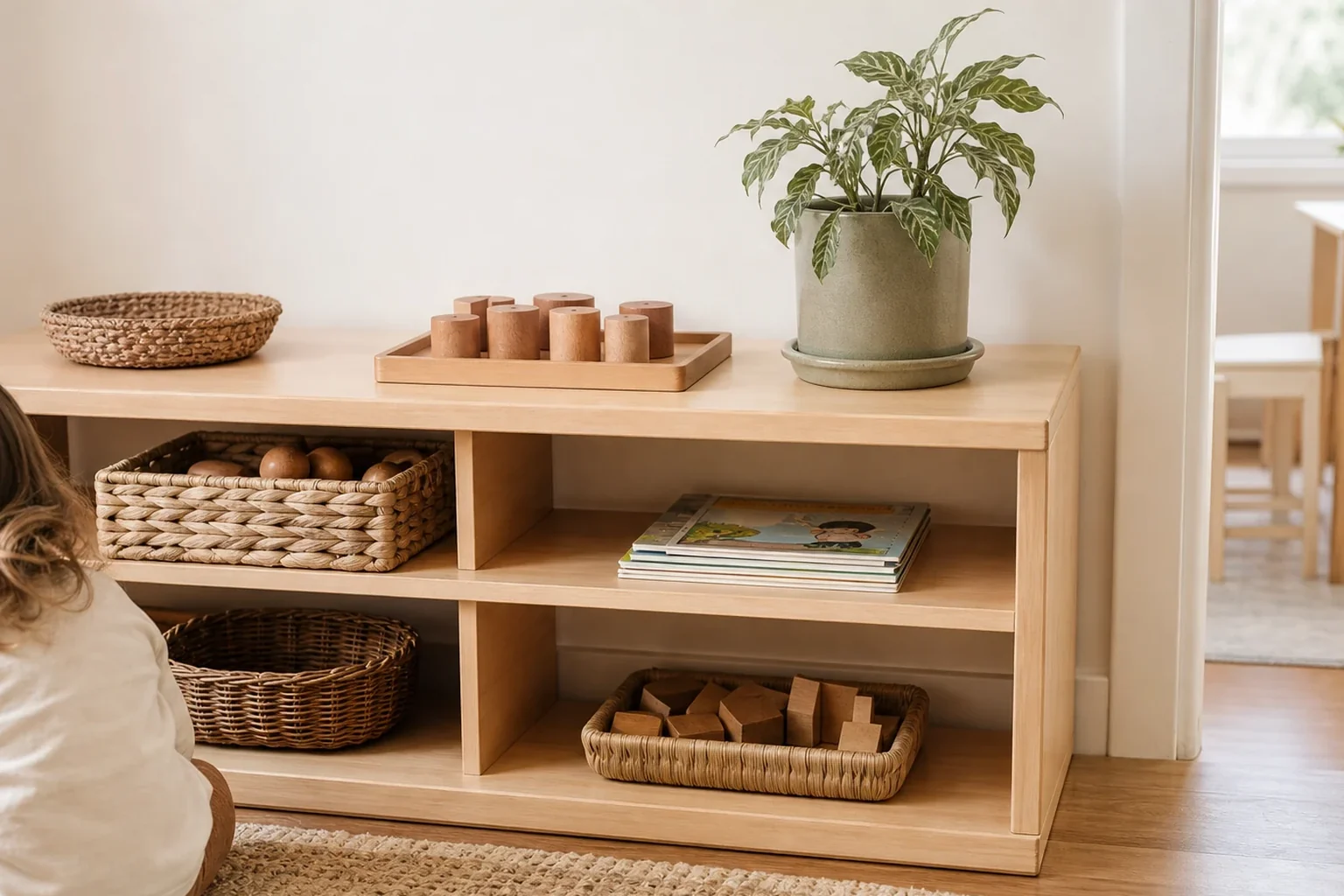
A Montessori toy does not live in isolation. It works best inside a thoughtful environment.
You can buy the “perfect” material and still get poor results if it lands in a giant pile of 40 other options. Too many toys create noise. Concentration drops. Cleanup becomes impossible. Everything starts to feel disposable.
A Montessori-style setup usually means:
- fewer toys out at once
- each one visible and reachable
- each one complete
- each one returned before the next comes out
This is why toy rotation matters so much. The environment is part of the method.
For the practical setup, start with our Montessori shelf guide. If the question is whether something already in your home deserves its place, compare it against this guide’s criteria and the cost-per-use test before replacing it.
If you want to organise a shelf more easily, low baskets, trays, and simple child-accessible furniture often matter more than buying more products. Even something as basic as a front-facing low bookshelf can change how materials get used.
Takeaway: A Montessori toy is helped by a Montessori setup. The shelf matters too.
So… what does not make a toy Montessori?
Let’s be blunt. These things alone do not make a toy Montessori:
- It is wooden
- It is beige or neutral-coloured
- It is expensive
- It says Montessori on the listing
- An influencer linked it
- It comes from a “Montessori brand”
Some products use Montessori as a style label when what they really mean is minimal, earthy, or vaguely wholesome.
That’s fine aesthetically, but it is not the same thing as educational fit.
When you’re deciding whether to buy, ignore the label for a moment and run through this shorter filter instead:
The 5-question Montessori toy filter
- Does it have one clear purpose?
- Does my child need to do something, not just watch?
- Can they see for themselves when it works?
- Is it right for their exact stage right now?
- Can they use it fairly independently?
If the answer is mostly yes, you’re probably in good territory.
What should you buy first if you’re starting from scratch?
If your home currently has a lot of noisy plastic and not much else, don’t panic and don’t do a dramatic toy purge at 11pm.
Start small.
A strong beginner Montessori-style setup often includes:
- one simple puzzle
- one posting or sorting activity
- one stacking activity
- one practical life item for real work
- a low shelf or tray system
That might look like:
- a wooden knob puzzle
- a shape sorter
- a ring stacker
- a child-sized broom and cleaning set
- a learning tower if your child wants to help in the kitchen daily
You do not need all of these at once. In many homes, the biggest upgrade is simply adding one real practical life tool and removing half the visual clutter.
A realistic first-week experiment
Instead of buying a full “Montessori set,” test the method with what you have:
- Put out one puzzle or sorter, one stacking/materials activity, and one real job such as wiping a small table.
- Keep each activity complete in its own tray or basket for five to seven days.
- Notice which item your child chooses without a prompt, repeats, and can help return.
- Keep the repeat winner; swap the ignored item only after checking whether it was too hard, too easy, or simply hidden by clutter.
This is observation, not a test your child can fail. Our practical-life routines guide has age-appropriate real jobs when you want the third activity to be less toy-like.
How we assess a “Montessori” toy claim
We review the visible task, the feedback it gives a child, the likely developmental fit, and whether it can be used and put away in an ordinary home. We do not treat a brand label, neutral colours, price, or wood alone as evidence of educational value. Amazon links are included only as optional product-search starting points and may earn Exploritori a commission at no extra cost to you; they are not a substitute for checking age guidance, small parts, condition, and supervision needs.
For a deeper materials and durability decision, read wooden vs plastic Montessori toys. For safety labels and material claims, use our non-toxic toy guide.
The bottom line
A Montessori toy is not defined by wood, colour palette, or price.
It is defined by what it asks of your child.
The best Montessori-style toys are simple, purposeful, reality-based, and just challenging enough. They support concentration. They allow self-correction. They help your child do more on their own. And often, they look less impressive to adults precisely because they leave more room for the child to do the real work.
That’s the test worth using.
Not “is it marketed well?”
But: does it help my child become more capable, more focused, and more independent?
If yes, you’ve probably found the right toy.
For the two labels that cause the most confusion, compare authentic Montessori materials with Montessori-inspired toys and read why wood versus plastic is the wrong first question. If price is the sticking point, our are Montessori toys worth it? guide uses the same function-first test.
Frequently Asked Questions
What makes a toy Montessori?
A toy is Montessori when it supports independent, hands-on learning with a clear purpose. The best Montessori-style toys isolate one skill, give built-in feedback, match your child’s developmental stage, and encourage active use rather than passive entertainment.
Are Montessori toys always wooden?
No. Wood is common because it is durable, sensory-rich, and pleasant to handle, but wood alone does not make a toy Montessori. Many excellent Montessori-style materials are made from metal, glass, fabric, or silicone if those materials better serve the activity.
What’s the difference between Montessori toys and regular toys?
Montessori toys tend to be simpler, more purposeful, and more focused on real skill-building. Regular toys are often designed for broad entertainment, fast novelty, or lots of features at once. Neither category is morally superior, but Montessori-style toys usually support deeper concentration and independence.
Do I need Montessori toys to do Montessori at home?
No. Many of the best Montessori activities use everyday household items like pitchers, spoons, cloths, brushes, bowls, and real food preparation tools. Montessori is more about how your child learns and how the environment is prepared than about buying branded products.
Are Montessori toys better for toddlers?
They can be, especially for toddlers who are craving repetition, independence, and practical work. A good Montessori-style toy matches the child’s exact developmental stage and offers enough challenge to hold attention without overwhelming them.
How many Montessori toys should I have out at once?
Usually just a few. Two to six well-chosen materials on a low shelf is often plenty, depending on your child’s age. Fewer visible options usually lead to better concentration and more purposeful play.
 Get weekly Montessori tips
Honest reviews, activity ideas, and budget-friendly picks — no spam, just what works.
Subscribe Free