Hape vs PlanToys: Which Brand Is Actually Better?
Why These Two Brands?
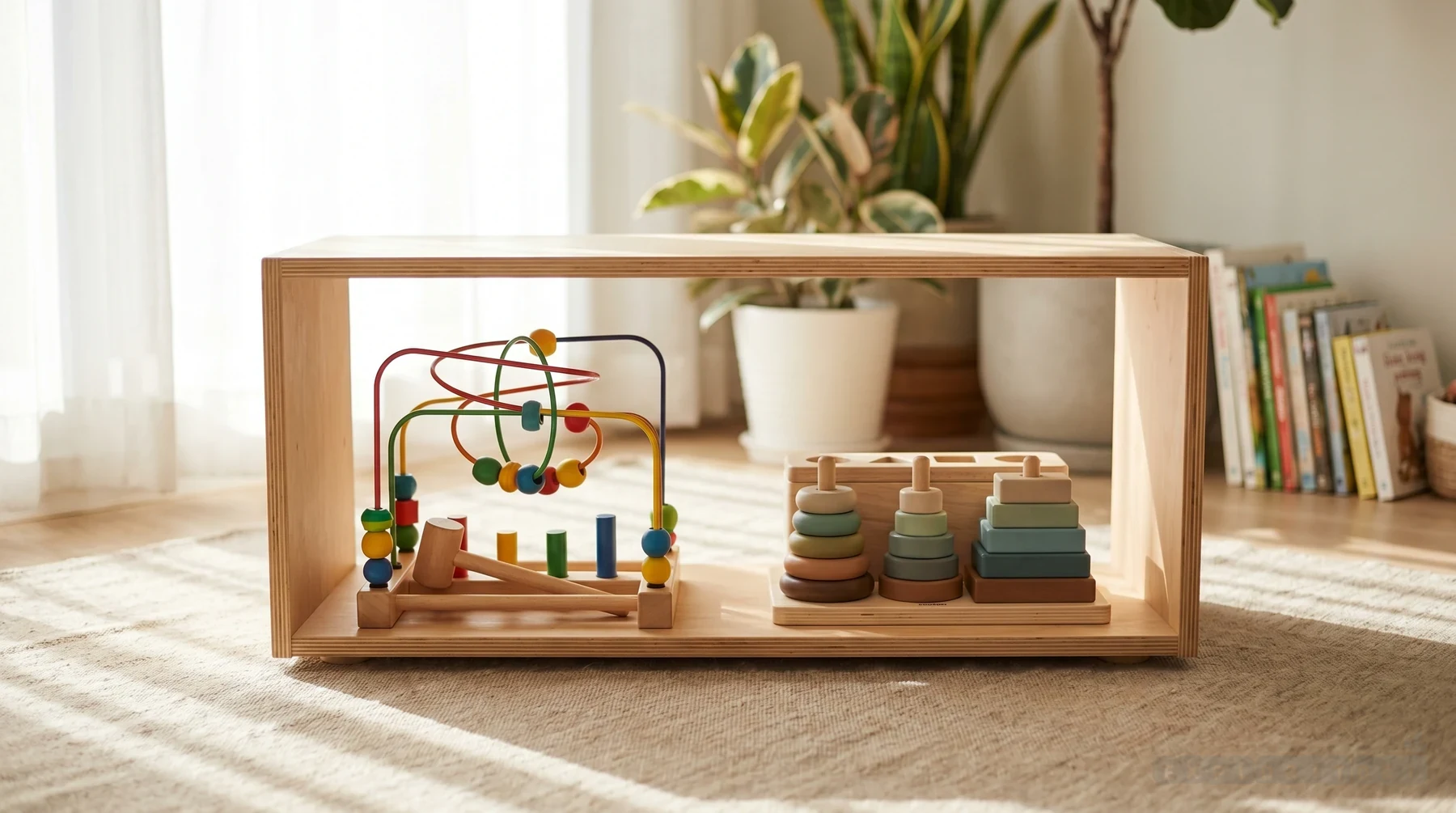
Walk into any Montessori-aligned toy conversation and two names come up constantly: Hape and PlanToys. Both make wooden toys. Both market to eco-conscious parents. Both show up on every "best Montessori toys" list (including ours).
But they're not the same company, and the differences matter when you're deciding where to spend your money. We compared the brands' published materials, current toy ranges, safety and sustainability claims, price bands, and the specific Hape and PlanToys products we already recommend across our age guides. Here's where they actually differ.
The Quick Comparison
| If this matters most | Better fit | Why |
|---|---|---|
| Lowest cost for a full toddler shelf | Hape | Wider catalogue and more budget-friendly essentials. |
| Sustainability story | PlanToys | Rubberwood reuse, PlanWood, organic pigments, and long-running factory-level commitments. |
| Minimal Montessori-style shelf | PlanToys | More single-purpose, muted, and intentionally constrained materials. |
| Pretend play, musical toys, marble runs, kitchens | Hape | More categories and more price points. |
| Resale or passing toys down | PlanToys | Stronger brand cachet and more consistent heirloom feel. |
| One toy that needs to do several jobs | Hape | More multi-function products, which can help in small homes. |
PlanToys
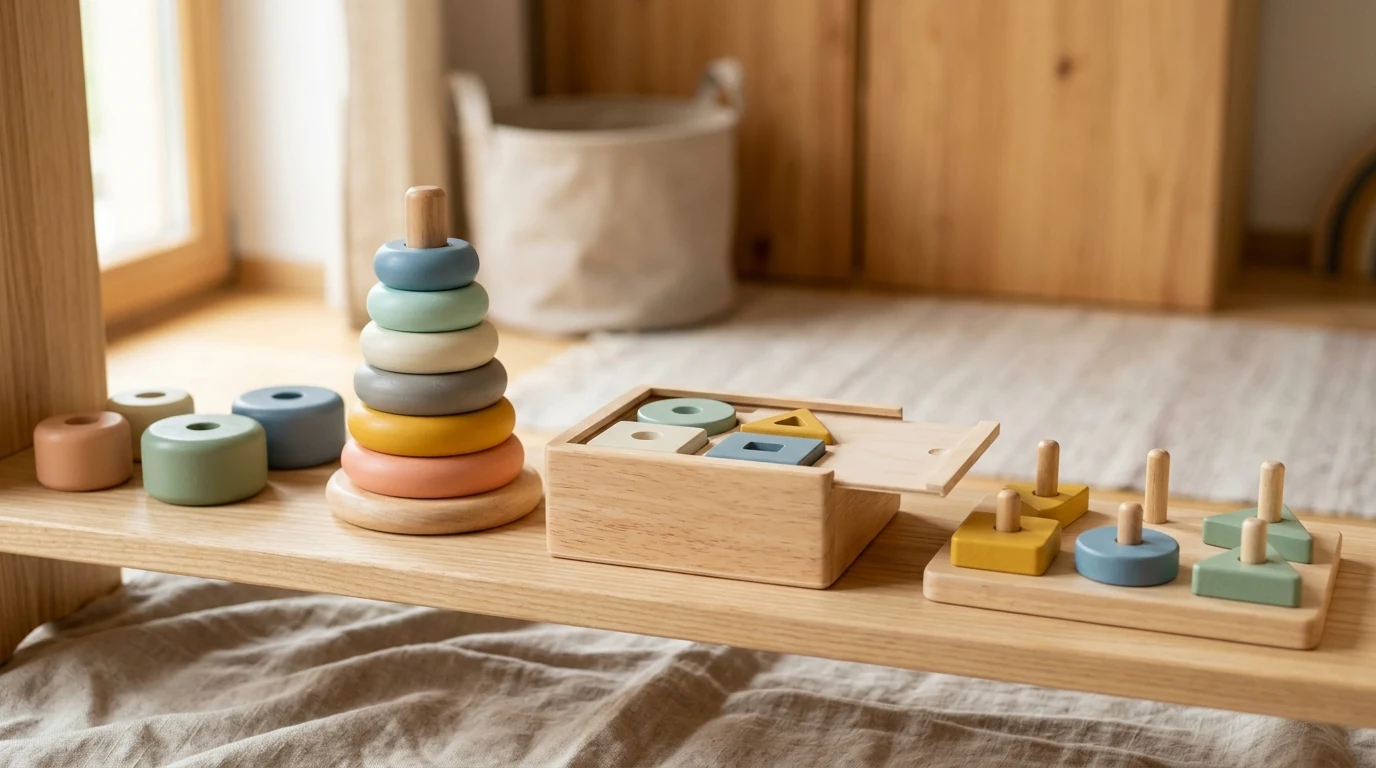
- Founded: 1981, Thailand
- Material: Rubberwood (from rubber trees that no longer produce latex)
- Price range: Mid to premium (15-50 euros for most toys)
- Design philosophy: Minimal, muted colours, very intentional
- Sustainability claim: Chemical-free manufacturing, PlanWood (compressed sawdust), organic pigments
- Best for: Parents who prioritise sustainability and design
Hape
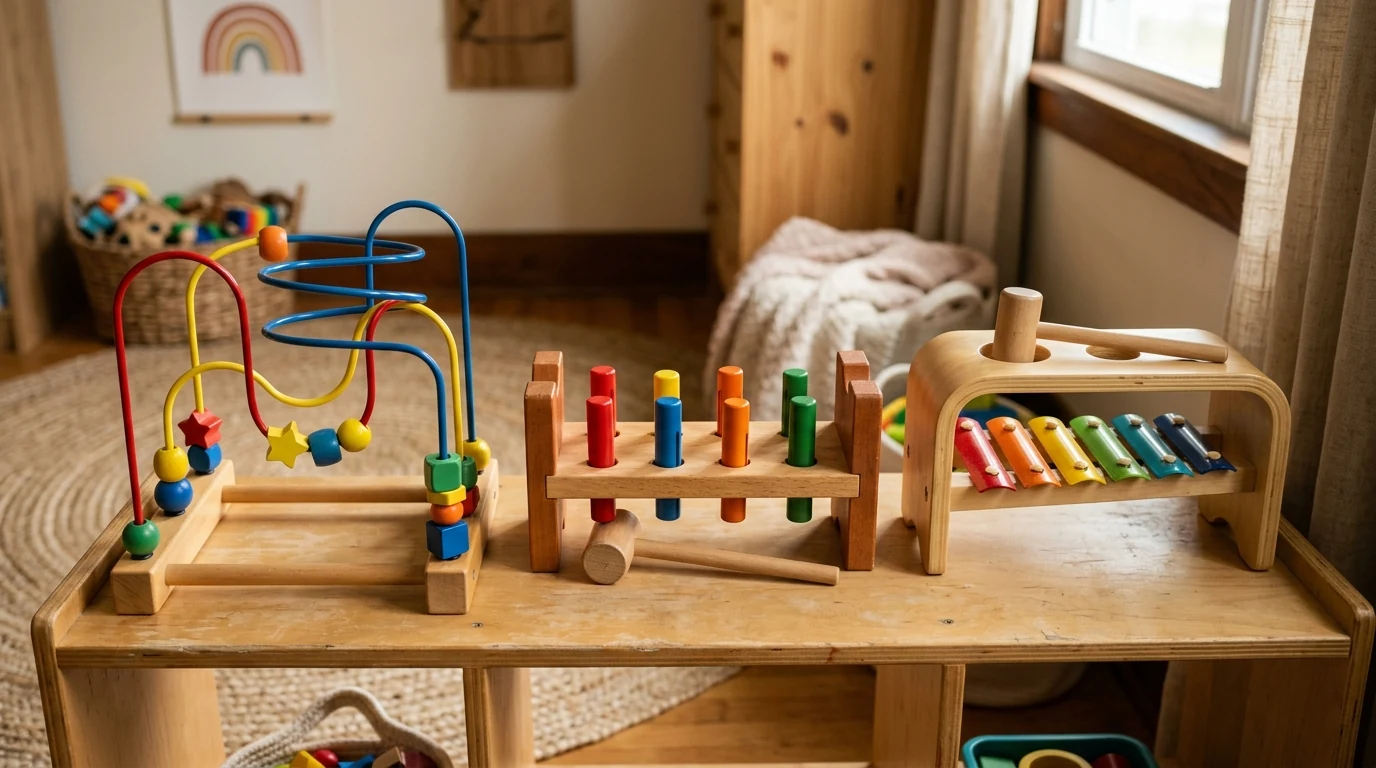
- Founded: 1986, Germany (manufacturing in China)
- Material: Various woods (bamboo, Baltic birch, rubberwood), some plastic components
- Price range: Budget to mid-range (8-40 euros for most toys)
- Design philosophy: Colourful, playful, wider range of products
- Sustainability claim: FSC-certified wood, water-based paints, bamboo products
- Best for: Parents who want quality wooden toys without the premium price tag
Quality and Durability
PlanToys
PlanToys products feel considered. The edges are smooth. The weight feels right in a child's hand. The colours -- those muted pastels -- are achieved with organic pigments and water-based dyes. Nothing feels like it was rushed off an assembly line.
Durability is excellent. Their solid rubberwood toys can handle being thrown, chewed, and generally abused by toddlers. The PlanWood products (made from compressed sawdust and non-formaldehyde glue) are slightly less robust -- they can chip at corners with heavy impact -- but still outlast most competitors.
Hape
Hape's quality is good, though more variable across their range. Their simpler toys (stacking rings, push toys, basic instruments) are well-made and durable — the Hape Double Bubble Bead Maze ($22) and Hape Stacking Donut ($18) are consistently well-made. Their more complex products (play kitchens, marble runs) occasionally have loose-fitting joints or paint that scuffs more easily.
The finish is generally smooth, paints are non-toxic and water-based, and they meet international safety standards. You won't feel like you're buying cheap -- but side by side with PlanToys, the difference in tactile quality is noticeable.
Verdict: PlanToys wins on consistency. Hape is good but more hit-and-miss at the complex end.
Sustainability
This is where PlanToys genuinely stands out.
PlanToys
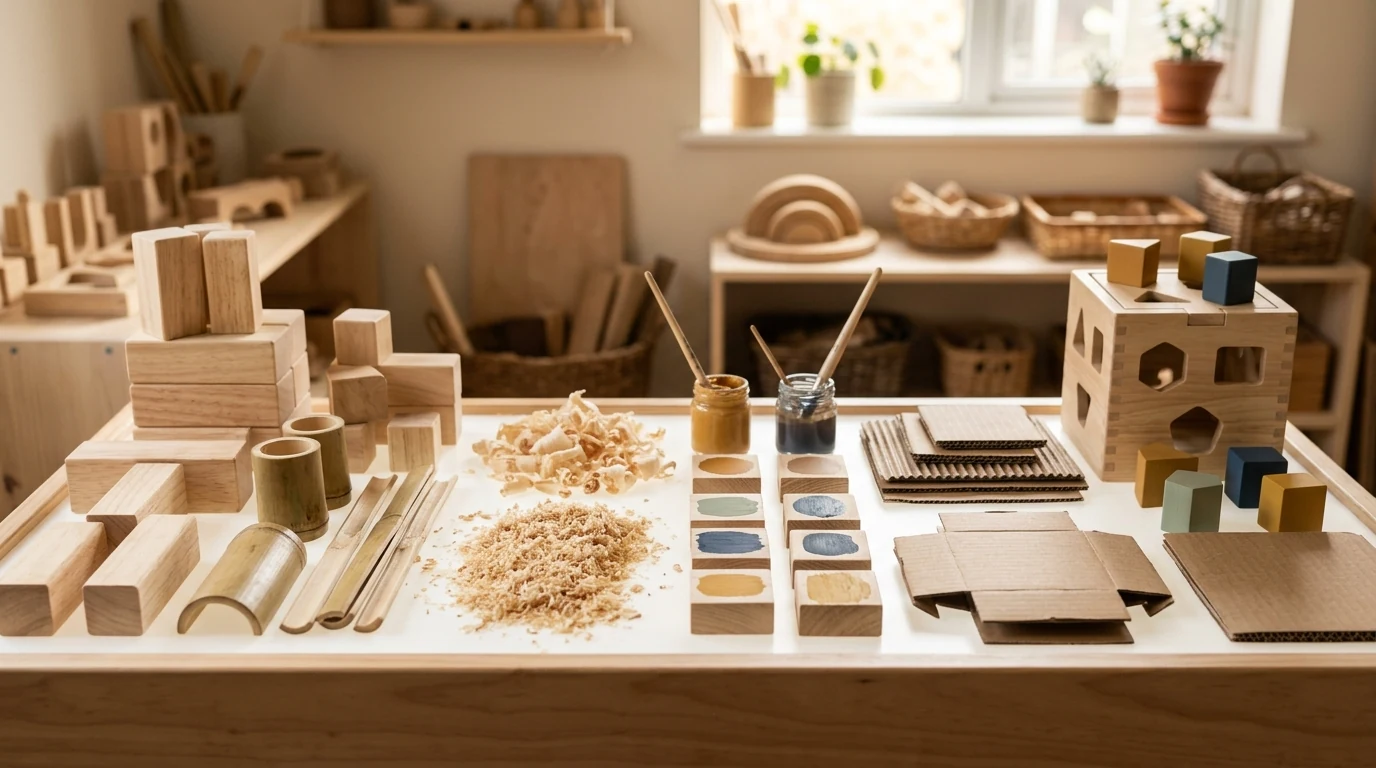
Their entire production model is built around sustainability:
- Rubberwood is a byproduct of the latex industry -- trees that would otherwise be burned
- PlanWood recycles sawdust from production
- Organic pigments (no chemical dyes)
- Solar-powered factory
- Minimal packaging, often recycled cardboard
- No formaldehyde glues
It's not greenwashing. They've been doing this since the 80s, long before sustainability was a marketing buzzword.
Hape
Hape's sustainability is genuine but less comprehensive:
- FSC-certified wood (good, but a lower bar than PlanToys' approach)
- Water-based paints (standard for the industry now)
- Bamboo products in some lines (fast-growing, sustainable)
- Manufacturing in China (higher carbon footprint from shipping to Europe)
- Some products include plastic components
Hape is better than average on sustainability. But compared to PlanToys specifically, they're playing catch-up.
The practical caveat: sustainability only matters if the toy is actually used for a long time. A PlanToys material that sits ignored in a basket is not automatically the greener purchase. The lower-impact choice is often the one you can buy second-hand, rotate well, repair if needed, and pass on when your child is done with it. For that reason, our buying order is usually: borrow or buy used first, buy one high-quality new item second, avoid buying five "eco" toys because the label feels virtuous.
Verdict: PlanToys by a clear margin. If sustainability is your primary concern, PlanToys is the better choice.
Price and Value
Here's where Hape fights back.
A typical PlanToys stacking ring costs 20-25 euros. A Hape equivalent runs 10-15 euros. For a similar wooden push toy, you're looking at 30-35 euros (PlanToys) versus 18-25 euros (Hape).
Over a full shelf of 5-6 toys, that difference adds up to 40-60 euros. For many families, that's significant.
And here's the thing: for a 14-month-old who's going to use a stacking ring for three months before moving on, the developmental benefit is identical. Your child doesn't know whether their toy was made in a solar-powered factory in Thailand or a facility in Ningbo. They care whether it's the right size, the right weight, and whether it's interesting enough to hold their attention.
Verdict: Hape offers better value. The price difference isn't justified by a proportional difference in developmental benefit.
Product Range
Hape's catalogue is enormous -- play kitchens, marble runs, musical instruments, puzzles, outdoor toys, bath toys, ride-ons. Whatever you need, they probably make it.
PlanToys is more curated. Their range is smaller but every product feels intentional. You won't find a PlanToys plastic bath toy because that's not what they do.
For Montessori specifically, both cover the essentials: stacking, sorting, threading, practical life tools. PlanToys has a dedicated "First Play" line for under-12-months — the PlanToys Nesting Puzzle Unit Plus ($28) and PlanToys Geometric Sorting Board ($22) are standout picks. Hape has more options for older toddlers and preschoolers, including the Hape Country Critters 5-Sided Play Cube ($55) and the Hape Gourmet Kitchen Set ($110) for ambitious pretend play setups.
Verdict: Hape for variety. PlanToys for curated intentionality.
Montessori Alignment
Neither brand is officially "Montessori" -- no commercial toy brand is. But both make products that work well in a Montessori setup.
PlanToys edges ahead here because their minimalist aesthetic and single-purpose designs align more naturally with Montessori principles. A PlanToys toy tends to isolate one skill or concept, which is exactly what Montessori materials do.
Hape toys are sometimes more multi-functional (like the Pound and Tap Bench, which combines hammering and a xylophone). Montessori purists might frown at this, but practically, multi-functional toys can be great for small spaces and budgets.
Verdict: Slight edge to PlanToys for philosophical alignment. But both work well in practice.
What to Buy by Age
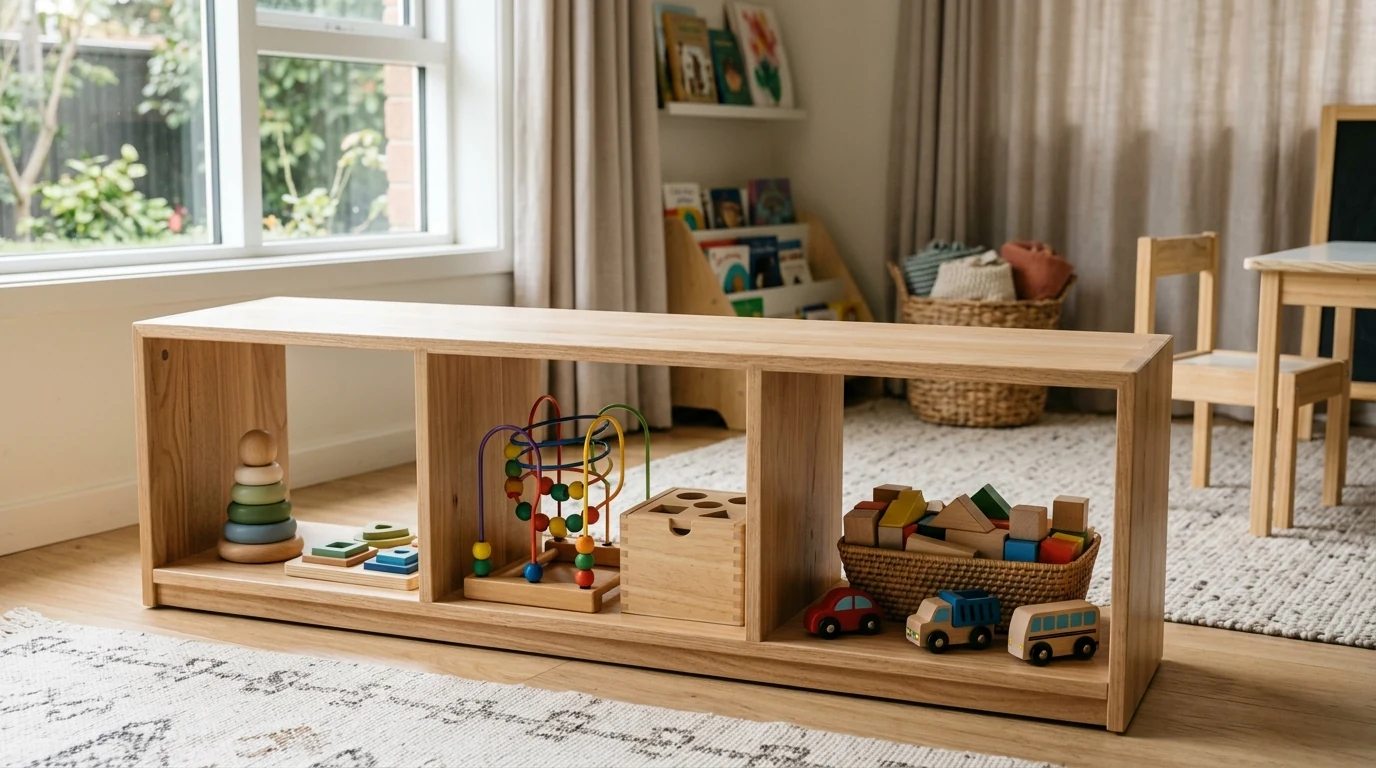
Brand matters less than fit. A beautiful wooden toy that is too easy or too advanced becomes clutter, no matter who made it.
| Age/stage | Best first Hape-style buy | Best first PlanToys-style buy | What to skip |
|---|---|---|---|
| 9-15 months | Pound-and-tap, bead maze, simple push toy | Stacking ring, nesting puzzle, first shape sorter | Large activity cubes if your baby still mouths everything aggressively. |
| 16-24 months | Pull-along, basic instruments, shape sorter | Sorting board, simple threaded pieces, pretend food | Toys with too many loose parts before cleanup is realistic. |
| 2-3 years | Kitchen accessories, marble-run starter, puzzles | Blocks, vehicles, pretend play sets with fewer pieces | Complex sets that need adult assembly every time. |
| 3-4 years | Marble runs, instruments, pretend play, construction | Open-ended blocks, matching games, small-world pieces | Babyish single-skill toys that will be mastered in a day. |
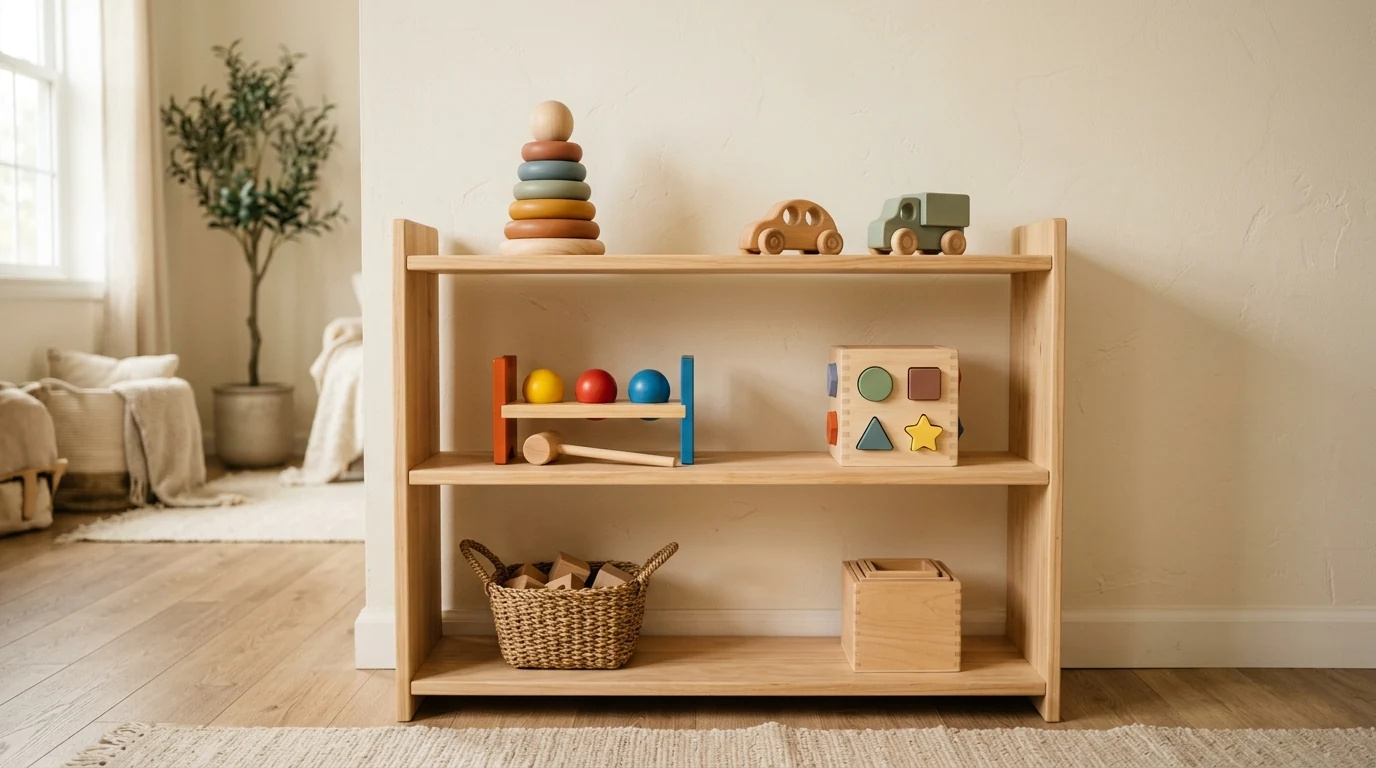
If you are setting up a shelf from scratch, start with our Montessori shelf setup guide and toy rotation rhythm before buying more. A simple shelf with four well-matched choices beats a premium brand haul every time.
Our Recommendations by Situation
If you're building a full shelf on a budget: Go Hape. You'll get more toys for your money, the quality is solid, and your child will benefit just as much developmentally.
If you're buying a few key pieces and want them to last through multiple children: Go PlanToys. The durability and resale value are higher. PlanToys items hold their value on second-hand markets better than almost any other brand. The Hape Twist & Tune Musical Turtle (~$20) is a charming Hape option if you want something smaller that will delight babies and toddlers alike.
If sustainability is your top priority: PlanToys, without question.
If you need a specific product type (play kitchen, marble run, etc.): Check Hape first — their range is simply wider. The Hape Roller Derby Wooden Marble Racing ($30) is a great example: spatial reasoning and engineering for ages 4+, at an accessible price. The PlanToys Jungle Gym Activity Cube ($75) is PlanToys' answer for activity cube lovers.
What we actually do: Mix both. PlanToys for the foundational pieces (stacking ring, first puzzles, threading toy), Hape for the fun extras (instruments, kitchen accessories, the Hape Pound & Tap Bench with Slide-Out Xylophone (~$30)). Best of both worlds.
For more on our specific product picks, see our guides for 1-year-olds, 2-year-olds, and 3-4 year olds.
If you are trying to decide whether either brand is worth paying for at all, read Are Montessori toys worth it? and wooden vs plastic Montessori toys next. If your main concern is safety labels and finishes, use our non-toxic Montessori toy guide.
Exploritori Rating
PlanToysExploritori Rating
HapeHow We Compared the Brands
This is a review-analysis guide, not a lab durability test across every product each company sells. We compared:
- current Hape and PlanToys product ranges available to parents in the US and Europe;
- published brand claims around materials, finishes, safety standards, and sustainability;
- typical Amazon and specialist-retailer price bands at the time of review;
- how each brand's products fit common Montessori home needs: isolation of difficulty, simple presentation, practical shelf rotation, and repeatable use;
- products already covered in our age-based toy guides, plus parent-facing trade-offs we see repeatedly when families build a first shelf.
Product links may be affiliate links, which means Exploritori may earn a small commission if you buy through them. That does not change the recommendation: choose the toy that fits your child's current stage, your space, and your budget. For safety, always check the current product listing, age grade, CE/EN71 or ASTM information, and local recall databases before buying second-hand or from marketplace sellers.
FAQ
Are PlanToys worth the extra money?
For heirloom pieces you want to pass down or resell -- yes. For everyday toys a toddler will use for a few months -- probably not. The developmental benefit is the same regardless of brand. Spend more on items with long shelf lives (building blocks, stacking toys), and save on things with shorter use windows.
Is Hape actually a German company?
Hape was founded by German entrepreneur Peter Handstein and is headquartered in Germany, but manufacturing happens in China. The design and safety standards are German; the production is not. Whether that matters to you is a personal call.
Which brand is safer?
Both meet EN71 (European) and ASTM (American) toy safety standards. Both use non-toxic, water-based paints. Neither has had significant safety recalls. For a one-year-old who puts everything in their mouth, both are safe choices.
Can I mix brands on a Montessori shelf?
Absolutely. The shelf doesn't care about brand consistency. Mix and match based on what serves your child's current developmental needs. A PlanToys stacking ring next to a Hape puzzle next to a Grimm's rainbow is a perfectly good shelf. For shelf setup tips, see our Montessori Shelf Setup Guide.
What about Grimm's? How does it compare?
Grimm's occupies a higher tier -- more artisan, more expensive (that Rainbow Stacker is around 55 euros), and designed more as open-ended creative materials than skill-specific toys. We've reviewed it separately in our Grimm's Rainbow Stacker Review. Think of Grimm's as the premium option, PlanToys as mid-premium, and Hape as accessible quality.
 Get weekly Montessori tips
Honest reviews, activity ideas, and budget-friendly picks — no spam, just what works.
Subscribe Free