Montessori Gift Guide: 20 Ideas Under €30
· Updated
Here's a truth that Montessori Instagram won't tell you: you don't need to spend a fortune to give a child a meaningful, developmentally rich gift. Some of the best Montessori-aligned toys and materials cost less than a family pizza dinner.
We've put together 20 gift ideas — all under €30 — organised by age group. Every product on this list is something we'd genuinely recommend, not just something with a decent commission.
Let's get into it.
Quick chooser: what should you buy first?
| If the child is... | Choose this first | Better to skip for now |
|---|---|---|
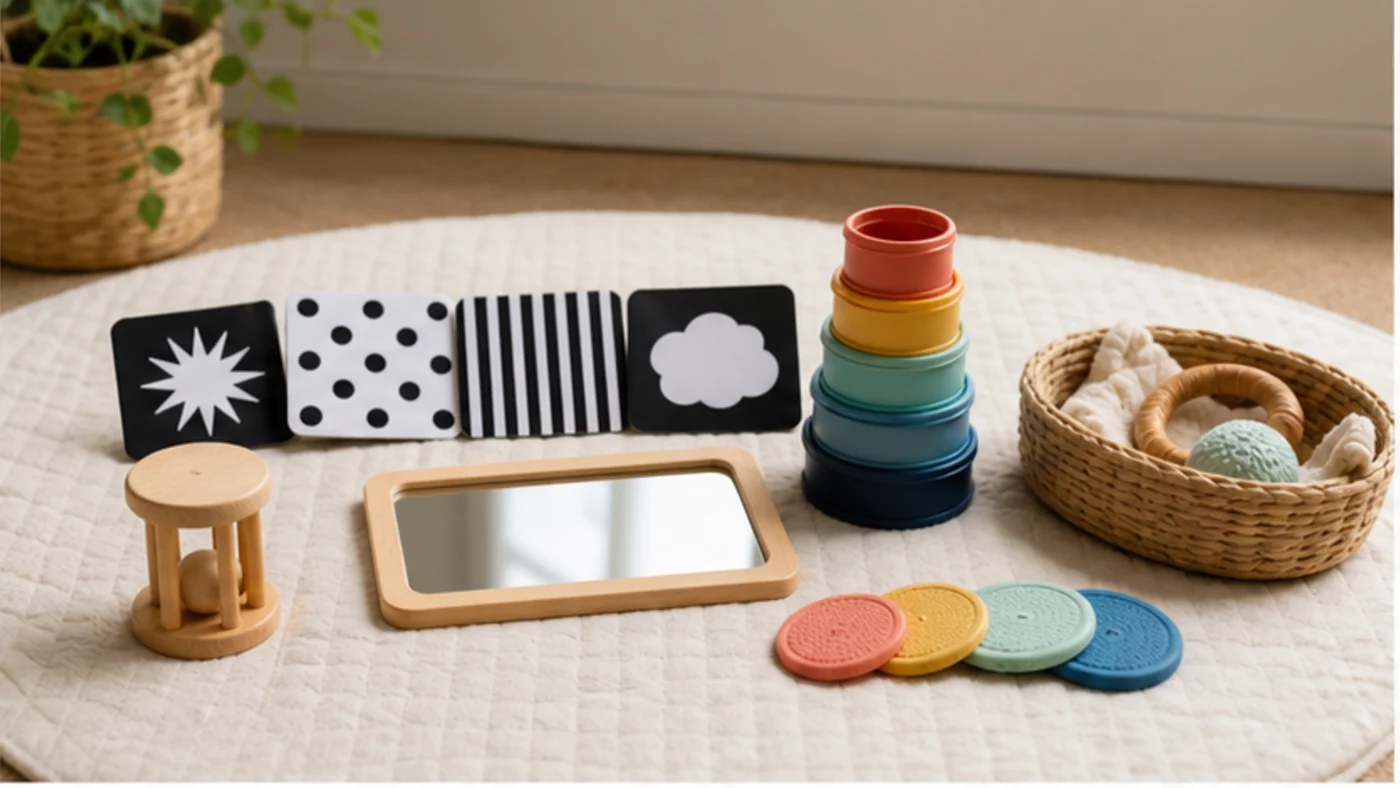
| 0-6 months and mostly lying, reaching, mouthing | High-contrast cards, a safe grasping toy, textured fabric squares | Busy activity cubes, tiny parts, anything with batteries |
| 6-12 months and sitting or crawling | Egg and cup, ball drop box, treasure-basket-style textures | Shape sorters with too many holes, puzzles with several pieces |
| 12-24 months and walking into everything | Stacking cups, one simple knob puzzle, a small broom | Pretend versions of real tools if a child-sized real tool is available |
| 2-3 years and asking to help | Pouring jugs, crinkle cutter, large threading beads | Delicate craft kits that require adult hands for every step |
| 3-6 years and ready for longer focus | Magnifying glass, watercolours, gardening tools, beginner sewing | "Educational" kits that are mostly worksheets or adult-led outcomes |
If you are buying for a child you do not know well, choose something open-ended and easy to rotate: stacking cups for under 2, animal figurines for 2+, or a real magnifying glass for 3+. If you know the child's age exactly, the age-specific guides for babies 0-12 months, 1-year-olds, and 2-year-olds go deeper.
Under-€30 Buying Rules That Prevent Clutter
| Rule | Why it matters | Good sign |
|---|---|---|
| Buy one clear purpose, not ten features | Children repeat simple work more deeply than noisy multi-feature toys | The child can understand the task without instructions |
| Prefer real materials when safe | Wood, cotton, metal, glass, and ceramic give richer feedback than lightweight plastic | The object has weight, texture, and a real household use |
| Check the next six months, not the next six years | A bargain is not a bargain if it sits in a cupboard until the child is ready | It matches what the child is already trying to do |
| Avoid Montessori as a label-only upgrade | "Montessori" on a listing can mean almost anything | The material isolates one skill and can be used independently |
| Budget for presentation | A tray, basket, or low shelf often matters more than another item | The child can take it out, use it, and put it back |
For a fuller reset of the play area, pair one gift with the toy rotation guide or the Montessori shelf setup guide. A €12 material on a calm shelf usually gets more use than a €30 toy buried in a box.
Ages 0-1: Baby's First Year
At this stage, babies are building foundational sensory awareness, developing grasp reflexes, and beginning to understand cause and effect. Simpler is better.
1. Wooden Grasping Toy — ~€10
A simple wooden rattle or grasping toy gives a baby something real to hold, mouth, and explore. Look for smooth, untreated wood with rounded edges. The Hape Grasping Toy is a reliable choice — lightweight, well-made, and interesting enough to hold attention without overwhelming.
What it develops: Grasp reflex, hand-eye coordination, sensory exploration (texture, weight, temperature of wood vs plastic).
2. High-Contrast Cards — ~€8
Newborns can only see high-contrast patterns clearly. A set of black-and-white cards propped up near their play area gives them something genuinely engaging to look at. By 3-4 months, you can introduce cards with simple colour patterns.
What it develops: Visual tracking, focus, early pattern recognition.
3. Wooden Egg and Cup — ~€12
One of the simplest and most effective Montessori materials for babies from about 6 months. The child learns to place the egg into the cup — a surprisingly challenging task that builds hand-eye coordination and introduces the concept of object permanence.
What it develops: Hand-eye coordination, concentration, early problem-solving.
4. Sensory Fabric Squares — ~€15
A set of different textured fabrics (silk, cotton, wool, velvet, linen) cut into small squares. You can buy sets or make your own from fabric scraps. Babies love exploring textures, and you can name the materials as they touch them.
What it develops: Tactile discrimination, language (naming textures), sensory awareness.
5. Ball Drop Box — ~€18
A simple box with a hole on top and a tray where the ball rolls out. Baby drops the ball in, watches it disappear, then sees it reappear. Sounds basic. Babies find it absolutely fascinating — and it directly supports understanding of object permanence.
Check ball drop boxes on Amazon
What it develops: Object permanence, cause and effect, hand-eye coordination.
Safety check: For every baby gift, ignore the Montessori label until you have checked the age rating, choking risk, finish, loose parts, cord length, and whether it can be cleaned. If you are assembling a DIY fabric or treasure basket gift, choose pieces too large to fit in the mouth and remove anything once it frays, cracks, or sheds fibres.
Ages 1-2: The Explorer Phase
This is when children start walking, talking, and wanting to do everything themselves. Toys that support independence and practical life skills are gold.
6. Wooden Stacking Rings — ~€12
A classic for a reason. Look for one with rings that are all the same colour (so the focus is on size, not colour) or one with naturally graduated colours. Avoid the ones with a wobbly base — the point is for the child to succeed, not to fight the equipment.
What it develops: Size discrimination, hand-eye coordination, fine motor skills, concentration.
7. Simple Wooden Puzzle (3-5 pieces) — ~€10
At this age, puzzles with large knobs and simple shapes work best. The knobs help develop the pincer grip (which they'll later need for writing), and the limited pieces prevent frustration. Look for puzzles with real images or simple geometric shapes.
Browse wooden knob puzzles on Amazon
What it develops: Pincer grip, spatial awareness, problem-solving, shape recognition.
8. Small Broom and Dustpan — ~€15
This isn't really a toy — it's a real tool, sized for small hands. Children at this age are desperate to participate in household activities. A child-sized broom lets them sweep alongside you. It won't be effective sweeping. That's not the point.
What it develops: Practical life skills, gross motor coordination, sense of belonging and contribution.
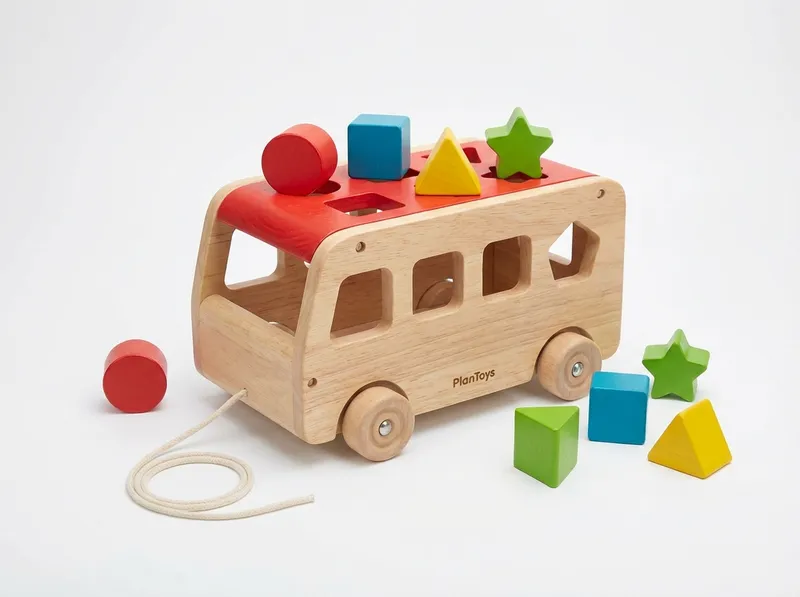
9. Posting Box — ~€20
A box with shaped holes (circle, square, triangle) and corresponding wooden blocks. The child figures out which shape fits where. Start with just the circle — it's the easiest — and add shapes as they master each one.
What it develops: Shape recognition, problem-solving, fine motor skills, spatial reasoning.
10. Stacking Cups — ~€8
Nesting and stacking cups are endlessly versatile. They stack, they nest, they become water scoops in the bath, they're towers to knock down. Look for simple, solid-coloured ones without busy patterns or characters.
What it develops: Size sequencing, hand-eye coordination, early mathematical thinking (big/small, more/less).
Presentation idea: Put only one or two materials out at a time: the broom near a real crumb spill, the puzzle on a low shelf, or the stacking cups in the bath basket. A toddler is more likely to use a gift when it belongs to a real routine. The practical life routines guide has more examples if you want the gift to become part of daily life rather than another toy.
Ages 2-3: The "I Do It Myself" Years
Independence is the name of the game. Children at this age want real responsibility and real challenges. Give them tools to succeed.
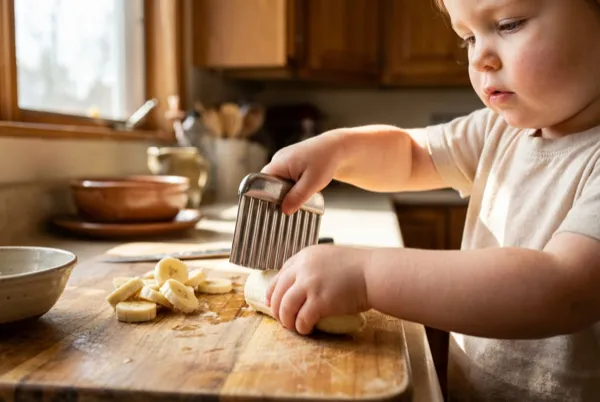
11. Cutting Set (Crinkle Cutter + Chopping Board) — ~€12
A crinkle cutter is wavy-edged, dull enough to be safe for small hands, but sharp enough to cut soft foods like bananas, mushrooms, or cooked vegetables. Pair it with a small wooden chopping board and let your child help with real meal prep.
What it develops: Fine motor skills, practical life skills, concentration, independence, food awareness.
12. Threading Beads (Large) — ~€14
Large wooden beads with a thick cord. Threading develops the bilateral hand coordination and focus that children at this age are primed for. Start with larger beads and a stiff-tipped cord (wooden needle or shoelace with taped tip).
See wooden threading beads on Amazon
What it develops: Fine motor skills, bilateral coordination, concentration, pre-writing skills.
13. Grimm's Small Rainbow (6 pieces) — ~€22
The smaller sibling of the famous 12-piece rainbow. Six arches is plenty for this age group, and the smaller size is easier for two-year-old hands to manage. It's open-ended, beautiful, and a good test of whether your child engages with this type of toy before investing in the larger version. (Read our full Grimm's Rainbow Stacker review for more detail.)
What it develops: Spatial awareness, creative building, colour awareness, imaginative play.
14. Pouring Set (Two Small Jugs) — ~€10
Two small ceramic or stainless steel jugs (not plastic — the real thing). Fill one with dried beans or rice and let your child practise pouring from one to the other. Yes, there will be spills. That's part of the learning.
What it develops: Fine motor control, concentration, practical life skills, hand-eye coordination.
15. Simple Animal Figurines — ~€20
A set of realistic animal figurines (Schleich and CollectA are good brands) gives children accurate representations to learn from. Pair with books about animals, sort by habitat, or use them for imaginative play. Avoid cartoon-style figures — realistic ones support accurate learning.
Browse Schleich animal sets on Amazon
What it develops: Language (animal names, habitats), classification skills, imaginative play, knowledge of the natural world.
Gift note for relatives: If you are giving this to another family, include a tiny card with one setup suggestion: "Start with three animals and a matching book," or "Use the cutter with banana first." That is more useful than a long Montessori explanation, and it helps parents avoid putting the whole set out at once.

Ages 3-6: The Expanding Mind
Children in this range are ready for more complex challenges, abstract concepts, and creative projects. They can handle real tools and genuine responsibility.
16. Magnifying Glass — ~€8
A real magnifying glass (not a toy one). Take it outside and explore leaves, insects, bark, stones. This simple tool transforms an ordinary walk into a science expedition. Look for one with a comfortable handle and genuine glass lens.
What it develops: Scientific observation, focus, curiosity, vocabulary (describing what they see).
17. Watercolour Paint Set — ~€15
A quality set of watercolour paints with a proper brush. Set up a painting station with a small cup of water, a cloth for blotting, and good paper. The process matters more than the product — let them experiment without directing what to paint.
What it develops: Fine motor skills, colour mixing understanding, creative expression, concentration, process focus.
18. World Map Puzzle — ~€18
A wooden puzzle of the world with each continent as a separate piece. At this age, children are in a sensitive period for culture and geography — they're naturally curious about the wider world. A map puzzle gives them something concrete to explore.
Find world map puzzles on Amazon
What it develops: Geography awareness, spatial reasoning, fine motor skills, cultural curiosity.
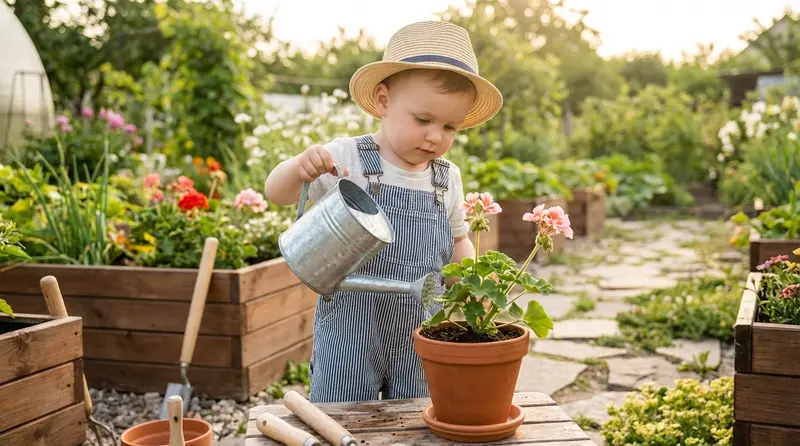
19. Gardening Tool Set — ~€15
Real, child-sized gardening tools — a small trowel, rake, and watering can. Give them a patch of garden (or a large pot) and some fast-growing seeds (cress, sunflowers, beans). Watching something they planted grow is powerful.
What it develops: Responsibility, patience, understanding of natural cycles, practical life skills, science observation.
20. Sewing Kit (Beginner) — ~€12
A large plastic needle, thick yarn, and burlap or mesh fabric. Children at this age can learn basic running stitch. It requires enormous concentration and coordination — and they're incredibly proud of the results. Start with simple straight lines, then move to basic shapes.
What it develops: Fine motor skills, concentration, bilateral coordination, patience, pre-writing hand strength.
Buy, Wait, or DIY?
| Gift type | Buy new | Wait | DIY or borrow |
|---|---|---|---|
| Mouthable baby items | When you can verify age rating, finish, and cleanability | If the listing is vague about materials or size | Only with very simple, washable fabric or household textures |
| Practical-life tools | When the child is already copying the routine | If the tool would need constant adult correction | Often yes: two small jugs, a cloth, a basket, or a child-safe kitchen setup |
| Open-ended wooden toys | When it replaces several novelty toys | If storage is tight or the child avoids building | Borrow first if you are unsure about rainbows, blocks, or large sets |
| Art and nature tools | When you can set up a contained work space | If cleanup would make adults avoid offering it | Yes for watercolour trays, nature baskets, and magnifying walks |
| Big branded Montessori sets | Rarely under €30, and not needed for this list | Usually worth waiting on | Recreate one activity at a time from the budget Montessori guide |
The short version: buy the item that solves a real next step, not the one that looks most Montessori in a gift photo.
Gift-Giving Tips
Don't give too many at once. One or two thoughtful gifts are more valuable than a pile of presents. Children get overwhelmed by choice and end up playing with the wrapping paper (which, honestly, is also a valid Montessori activity).
Think about the child's current interests. A child who's obsessed with pouring water will get more from a pouring set than a puzzle. Observe before you buy.
Presentation matters. Place the gift on a tray or in a basket rather than in flashy packaging. A simple, beautiful presentation invites exploration.
Include the parents. If you're giving a gift to someone else's child, a brief note about what the toy develops and how to present it goes a long way. Not everyone knows what to do with a wooden egg and cup.
Need more ideas by age? Our complete guide to Montessori toys from 0–6 years goes deeper into what works at each developmental stage.
How this guide was put together
This is a review-analysis gift guide, not a claim that we tested every individual listing in a home. Items were included because they match common Montessori principles: simple purpose, real sensory feedback, child-sized independence, repeatable use, and a reasonable path from adult setup to child-led practice. I also checked whether each idea can make sense under a €30 ceiling without needing a larger system around it.
Product links are examples to help identify the type of material. Some may be affiliate links, which can earn Exploritori a commission at no extra cost to you. The recommendation stays the same either way: buy fewer, sturdier gifts, check age and safety guidance, and choose what fits the child in front of you.
Frequently Asked Questions
Are Montessori gifts boring for children?
Not at all. "Simple" doesn't mean boring — it means the child provides the complexity. A set of wooden arches becomes a bridge, a tunnel, a house, a fence, a ramp. Children don't need flashing lights and sound effects to be engaged; they need toys that respond to their ideas.
Should I avoid all plastic toys?
Not necessarily. The Montessori preference for natural materials is about sensory richness — wood, metal, fabric, and glass offer more varied sensory feedback than plastic. But a high-quality plastic item (like a good magnifying glass or measuring cup) is fine. It's about thoughtfulness, not dogma.
My child only plays with character toys. Will they like these?
Probably, if introduced thoughtfully. Don't replace everything at once. Place one new material on a shelf and let curiosity do its work. Many children who seem "addicted" to character toys simply haven't been offered compelling alternatives.
What about screen-based educational toys?
We don't include them in this guide. Not because technology is bad, but because children under 6 learn best through hands-on, sensory-rich experiences. A tablet can teach letters; wooden sandpaper letters teach letters while also developing the fine motor skills needed to write them.
Can I DIY any of these gifts?
Absolutely. Sensory fabric squares, pouring sets, and cutting boards can all be assembled from things you already have at home. A pillowcase, a wooden spoon, two cups, and some dried pasta make a perfectly good Montessori gift for a toddler. It's the thought behind the activity that matters, not the price tag.
What's the best Montessori gift for a child I don't know well?
The Grimm's Small Rainbow (ages 2+) or a set of realistic animal figurines (ages 3+) are safe bets. They're open-ended enough to suit most children, visually appealing, and don't require specific knowledge of the child's developmental stage.
 Get weekly Montessori tips
Honest reviews, activity ideas, and budget-friendly picks — no spam, just what works.
Subscribe Free