Montessori Routine Cards for Toddlers: Build Calm Morning and Bedtime Rhythms at Home

Some toddler moments feel chaotic for reasons that have nothing to do with your child being “difficult.”
Morning is a classic example.
You know the steps. Your child does not fully hold them in mind yet. So you say the same things over and over.
Shoes.
Toilet.
Hands.
Teeth.
Jacket.
And somehow everyone is already annoyed before breakfast is even over.
That is exactly where Montessori routine cards can help.
They turn an invisible adult checklist into something your child can actually see. Instead of being pulled through the routine by constant reminders, your toddler gets a simple visual path to follow.
That usually means fewer battles, more cooperation, and a lot more chances to say, “You did that yourself.”
Start with the routine that needs help most
| If this is the hard moment | Start with these cards | Keep the first version to |
|---|---|---|
| Everyone stalls before leaving | toilet/potty → hands → clothes → shoes | 4 steps |
| Bedtime keeps stretching | tidy → wash → pyjamas → teeth → book | 5 steps |
| Snack creates repeated requests | wash hands → choose food → eat → clear cup/plate | 4 steps |
| Bathroom care needs prompting | toilet → flush (if ready) → hands → towel | 3–4 steps |
Choose one row, not the whole house. If a step still needs full adult help, keep it on the chart only when you can do it together; otherwise, leave it out for now.
🌿 What Montessori routine cards actually are
Montessori routine cards are simple visual prompts that show the steps of a familiar routine.
That might be:
- use the toilet
- wash hands
- get dressed
- brush teeth

- choose a book
- put dirty clothes in the basket
- put on shoes
The point is not to create a cute chart for the wall.
The point is to make the sequence visible so your child can rely less on your voice and more on the environment.
That is very Montessori.
Montessori is always trying to answer the same question:
How can the environment carry more of the work so the adult does less directing?
Routine cards do that beautifully.
They support order, which is one of the biggest needs in the toddler years. Young children usually feel calmer when daily life follows a pattern they can predict. When the steps stay in the same order, your child starts to internalise them.
That is why routine cards often work better than repeated verbal reminders. Your words disappear. The visual stays.
For younger toddlers, the best cards are usually very concrete. A real photo of your child’s toothbrush is often better than an abstract clip-art drawing of “oral hygiene.”
Takeaway: routine cards are not about making your child obey a chart. They are about making daily order visible enough for your child to participate.
👀 Why visual schedules work so well for toddlers
Toddlers are still building sequencing, memory, and self-regulation.
They may understand one instruction at a time just fine. What is harder is holding a whole routine in mind while moving through it.
So when you say, “Go to the bathroom, wash your hands, then get your shoes,” your child may only keep the first fragment. Or the last one. Or none of it if they got distracted by a sock on the floor and a highly urgent crumb.
A visual schedule reduces that load.
It gives your child:
- a clear beginning
- a visible next step
- a known ending
- less dependence on adult prompting
That matters because many routine struggles are really transition struggles.
Children resist less when they can see what is happening and what comes next. Predictability lowers friction.
Routine cards also help you sound calmer. Instead of repeating yourself ten times, you can point and say, “Let’s check the next card.” That small shift changes the tone of the whole interaction.
If your toddler is especially strong-willed, sensitive, or easily overwhelmed, the benefit can be even bigger. Visual structure removes some of the power struggle because the routine is no longer living only in your head.
This is also why routine cards pair so naturally with other Montessori home systems like a Montessori bathroom setup, Montessori dressing skills setup, Montessori practical life activities, or a toy rotation system. The routine works better when the materials are accessible.
Takeaway: visual schedules help toddlers because they replace vague adult reminders with something concrete, predictable, and repeatable.
🧺 The best routines to start with
Not every part of family life needs a chart.
Routine cards work best when the routine is:
- repeated every day
- short enough to remember
- made of clear physical actions
- realistic for your child to do with some independence
The strongest starting points are usually morning and bedtime.
Morning routine ideas
A simple toddler morning routine might be:
- toilet or potty
- wash hands
- get dressed
- brush teeth
- eat breakfast
- put on shoes
That is enough.
You do not need a 14-step masterpiece.
Bedtime routine ideas
A calm bedtime chart might be:
- tidy one small area
- bath or wash face
- pyjamas
- brush teeth
- choose books
- cuddle and lights out
Other good routine-card uses
- handwashing steps
- getting ready to leave the house
- after-nursery or after-school routine
- snack setup and cleanup
- simple toileting sequence
- putting dirty clothes in the laundry basket
The best first routine is the one that already happens daily and already causes a little friction.
If mornings are the pain point, start there.
If bedtime is where everyone falls apart, do bedtime.
Do not build five charts at once. One clear win is much more useful than a house full of laminated ambition.
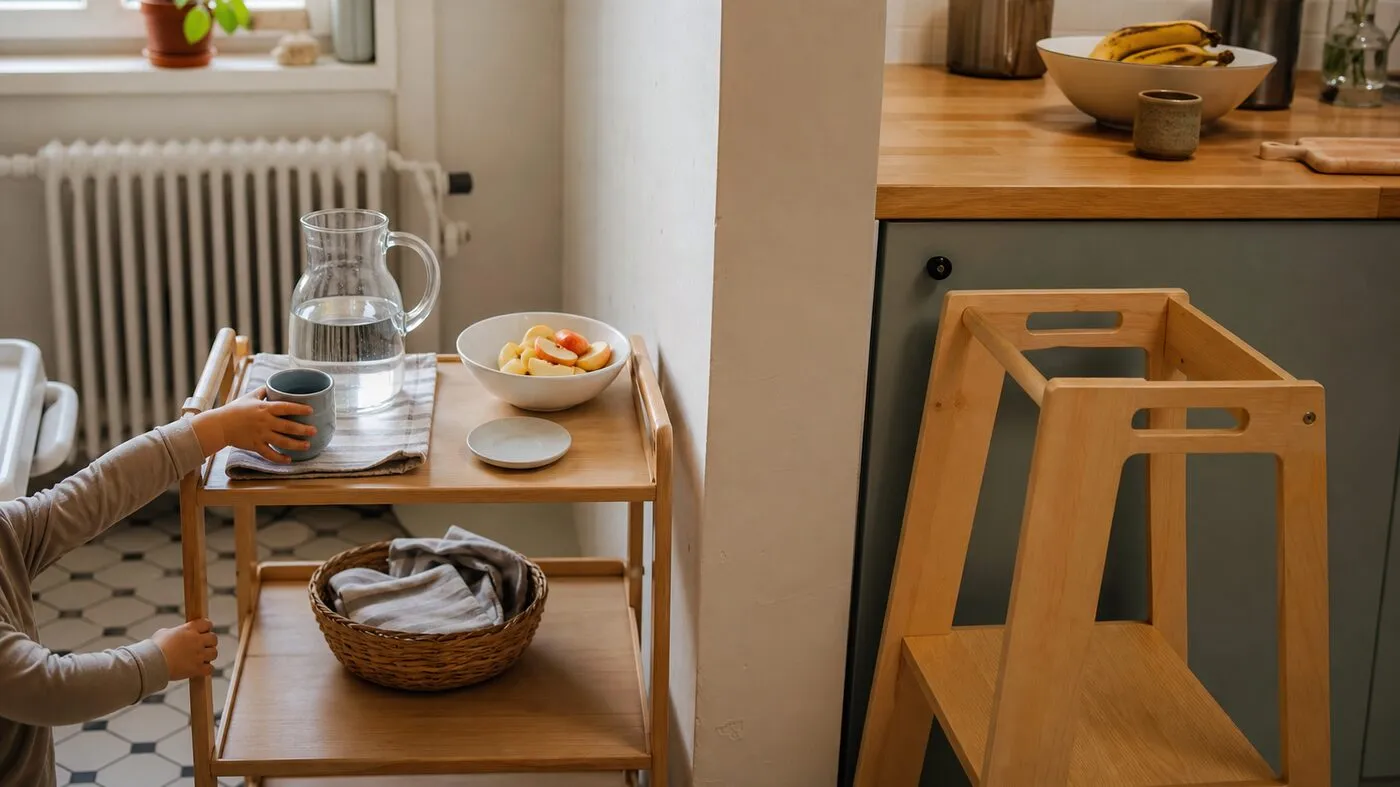
If your child needs more independence in the care parts of the routine, a few practical supports can help a lot: a child-friendly soap dispenser for easier handwashing, an acrylic safety mirror so your child can actually see what they are doing, and a toddler learning tower if sink or counter access is the real bottleneck. For food routines, pair the cards with a simple Montessori snack station so snack has visible steps instead of constant adult prompting.
Takeaway: start with one daily routine that already matters in your real house, not the one that looks nicest on Pinterest.
✂️ How to make Montessori routine cards at home
You do not need special Montessori printables to make this work.
Honestly, homemade cards are often better because they match your child’s real environment.
A photo of your shoes by your front door is easier for a toddler to connect with than a generic cartoon boot floating in educational space.
Here is a very workable DIY version:
Option 1: Use real photos
Take simple photos of:
- the toilet or potty
- the sink
- toothbrush
- pyjamas
- shoes
- bookshelf
- laundry basket
Print them small, one action per card.
Option 2: Use simple drawings or icons
This works well if you want a cleaner look or do not want to print photos.
Just keep the images obvious. Tiny toddlers do not need design elegance. They need clarity.
Option 3: Buy ready-made cards
If you would rather skip the DIY, you can browse toddler visual schedule cards or a pocket chart visual schedule for toddlers. These can be helpful if you want a fast start.
A few simple setup tips matter more than whether the cards are homemade or bought:
- keep each step large and easy to see
- use only the steps your child can mostly understand
- place the chart where the routine happens
- keep the order consistent
- remove extra decorative clutter
You can tape the cards to the wall, stick them on a small board, or keep them in a little vertical strip. If you like a more contained setup, small wooden trays can help organise cards, toothbrush items, or bedtime books into one readable routine station.
If you add words, treat them as a bonus, not the main feature. Young toddlers are reading the image, not decoding the text.
Takeaway: the best routine cards are the ones your child recognises instantly and sees in the exact place the action happens.
A seven-day routine-card reset (without making it a project)
| Day | Your job | What to watch for |
|---|---|---|
| 1 | Pick one friction point and photograph or draw 3–5 real steps. | Can your child identify each picture? |
| 2 | Put the cards at child eye level where the routine happens. | Is anything needed for the step out of reach? |
| 3 | Walk through the sequence together once, slowly. | Which card needs a clearer image or fewer words? |
| 4–5 | Point to “next” instead of repeating the whole instruction. | Does one step consistently cause a stall? |
| 6 | Remove any step your child cannot act on yet; simplify. | Is the routine short enough to finish calmly? |
| 7 | Keep what helped and leave the rest alone for another week. | Are prompts becoming shorter or transitions easier? |
A card is not a test your child can fail. If the sequence falls apart on a rushed morning, guide them through it and return to the visual later. Consistency matters more than perfect compliance.
🪥 How to set them up the Montessori way
The cards alone are not the whole system.
If the routine says “brush teeth” but the toothbrush is stored high in a closed cupboard, the chart is going to feel like a cruel joke.
Montessori routine cards work best when the environment backs them up.
Ask yourself these questions:
- Can your child reach the materials?
- Is each step physically possible?
- Is the path obvious?
- Is there too much visual noise nearby?
That often leads to small but high-impact changes.
For example:
In the bathroom
- low hook for towel
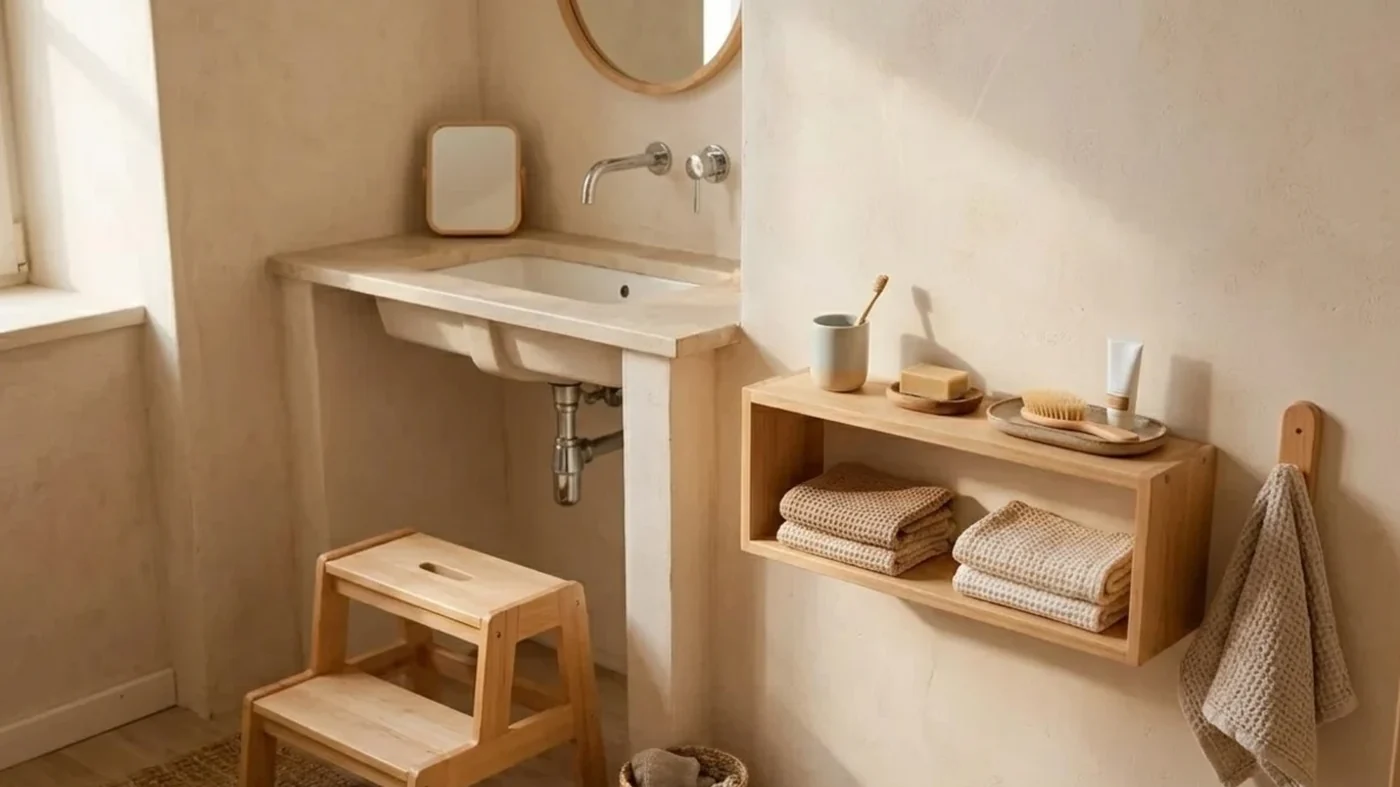
- stool for sink access
- soap pump that small hands can press
- mirror at child height
- toothbrush cup within reach
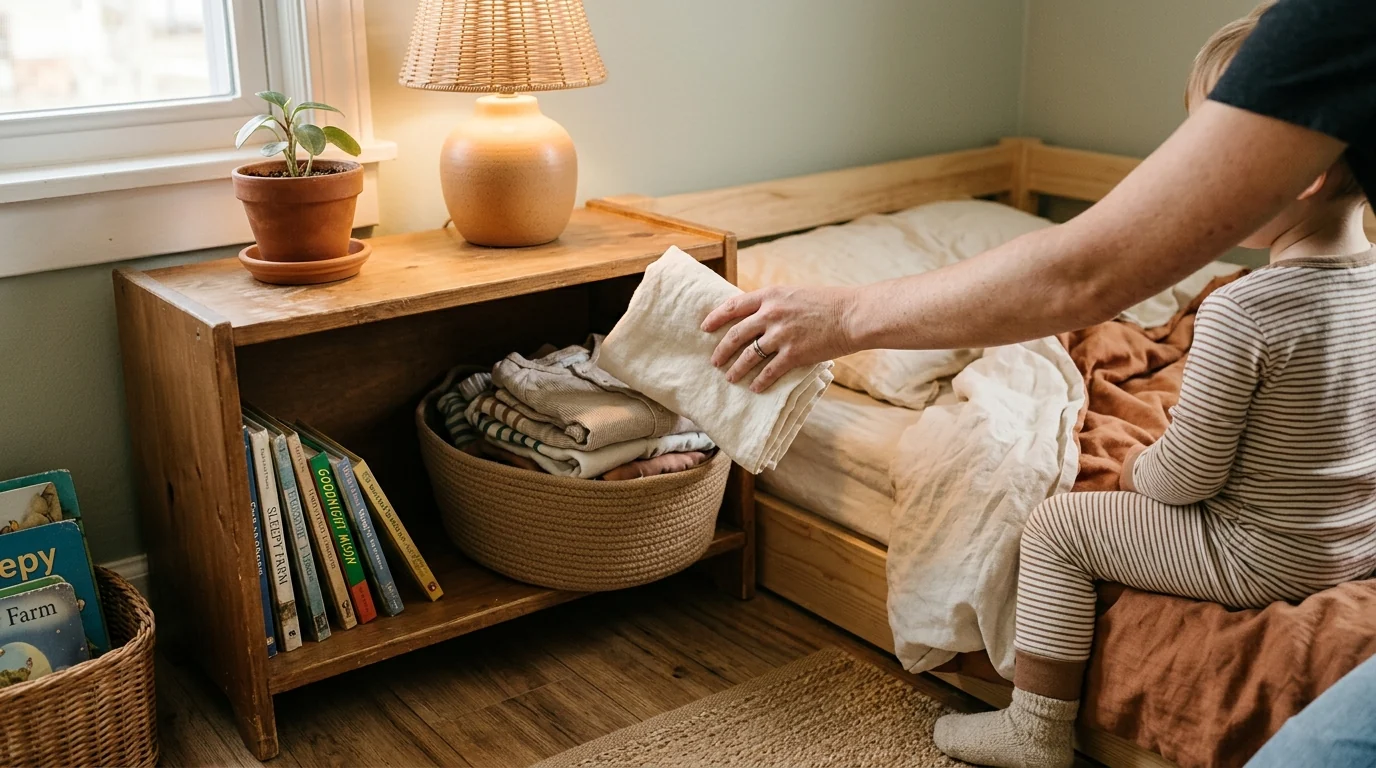
In the bedroom
- two simple clothing choices, not eight
- pyjamas in one predictable place
- a low basket for dirty clothes
- front-facing bedtime books
Near the door
- one shoe basket
- one hook or spot for jacket
- one tray for daily essentials
This is the quiet magic of Montessori. The adult stops managing every tiny step because the room starts carrying more of the routine.
If bedtime stories are part of the flow, a low Montessori bookshelf for toddlers can help keep a few calm books visible and easy to choose. Not because special furniture is required, but because accessibility changes behaviour.
Our IKEA Montessori hacks guide and Montessori shelf setup guide both work well as companions here, because routine success is usually an environment question first.
Takeaway: a visual routine works much better when your child can actually do the actions the cards are asking for.
⚠️ Common mistakes that make routine cards fail
When parents say routine charts “didn’t work,” the problem is usually not the idea itself.
It is the setup.
Here are the most common mistakes.
Too many steps
If your chart looks like a project manager built it, it is too much.
For a young toddler, four to six steps is often enough.
Starting with an unfamiliar routine
Routine cards work best when the sequence already exists in real life.
They support a known pattern. They do not magically create one from nothing.
Using cards without changing the environment
A card that says “hang towel” is not helpful if there is nowhere reachable to hang it.
Over-explaining
You do not need a speech before every card.
Point, name the step, and move.
Expecting instant independence
Routine cards are a support, not a miracle.
At first, your child still needs modelling. You are building the bridge between the image and the action.
Swapping the order all the time
Consistency is what gives the system power.
If breakfast comes before teeth on weekdays, after teeth on weekends, and during cartoons on desperate Tuesdays, the chart loses authority fast.
Turning the chart into a reward system
This is the big Montessori difference.
The routine itself is the point. You do not need to shower your child with stickers for brushing teeth. The chart is there to support competence, not to become another external prize machine.
Takeaway: routine cards fail when they are too complicated, too abstract, or disconnected from the actual environment.
🌙 What progress looks like in real life
Progress does not usually look dramatic.
It looks like smaller things.
Your child checks the chart and walks to the sink without being told.
They bring you the pyjamas before bedtime.
They point to the shoe card and say “next.”
They stop arguing about every transition because the sequence feels familiar.
That is the win.
Routine cards are not meant to make family life robotic. They are meant to free up energy that was being wasted on repeated reminders and predictable friction.
And once one routine works, you can often extend the same logic elsewhere.
A child who uses a bedtime chart well may later be ready for a snack routine, a cleanup sequence, or a simple getting-ready-for-school chart.
That is how Montessori at home often grows. Not through giant overhauls. Through one calm, workable system at a time.
If you are choosing where to begin, I would start with the routine that drains you most. Build it simply. Keep the cards visible. Adjust the environment. Give it a week or two before judging it.
That is usually enough time to see whether the room is starting to do more of the work.
Takeaway: success looks like less prompting, smoother transitions, and a child who starts owning small parts of the routine.
How we approach this guide
This is practical home-setup guidance, not a promise that a chart will solve every transition. The recommendations are based on Montessori principles of accessible materials, predictable order, and giving toddlers a meaningful part in daily care. Adapt the number of steps to your child’s development, language, sensory needs, and your family’s schedule.
For toileting, sleep, and big emotional reactions, routine cards can support predictability but are not medical or behavioural treatment. Ask your child’s clinician or a qualified local professional when you are concerned about development, sleep, or toileting. Some product links may be affiliate links; they never change the price you pay, and a homemade photo-card set is a completely valid place to start.
❓ FAQ: Montessori routine cards for toddlers
What are Montessori routine cards?
Montessori routine cards are visual prompts that show your toddler the steps of a daily sequence like getting dressed, brushing teeth, or washing hands. They make the routine easier to understand and follow independently.
What age can toddlers use visual schedule cards?
Many children can start around 18 months to 2 years with very simple, familiar routines. Older toddlers usually manage them with more independence.
Should I use photos or illustrations?
For young toddlers, real photos are often best because they connect directly to your child’s real environment. Illustrations can work well too if they are very clear and uncluttered.
Do routine cards help with tantrums and transitions?
They can help a lot with transition friction because they make the sequence predictable. They do not remove every hard feeling, but they often reduce confusion and repeated power struggles.
Do I need to buy a Montessori routine chart?
No. Printed photos, simple drawings, or index cards can work beautifully. A ready-made version can save time, but clarity matters much more than buying the “right” set.
 Get weekly Montessori tips
Honest reviews, activity ideas, and budget-friendly picks — no spam, just what works.
Subscribe Free