Montessori Bed Guide: Floor Bed vs Toddler Bed vs House Bed
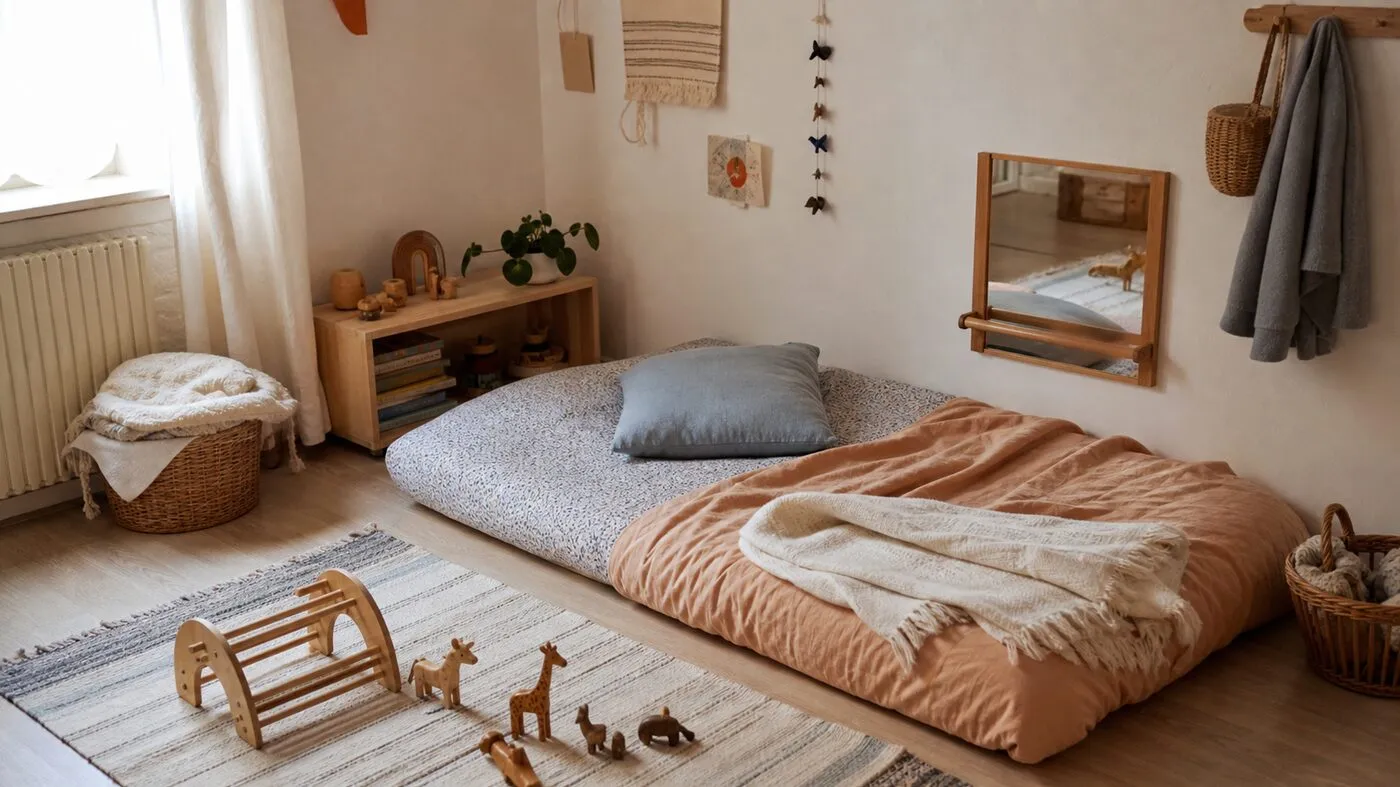
Choosing a Montessori bed sounds simple until you start looking.
Suddenly every low bed online is apparently life-changing. Every house frame is “Montessori.” Every nursery photo is pale wood, linen, and a child who somehow never throws a stuffed rabbit at 5:43 in the morning.
So let’s make this much more practical.
If you are trying to choose between a floor bed, a toddler bed, and a house bed, the real question is not which one looks most Montessori.
The real question is: which sleep setup gives your child the right amount of independence without making the room harder to use, less safe, or more chaotic?
That is the decision that matters.
First: there is no single “Montessori bed”
This is the most useful thing to understand up front.
Montessori does not require one magical bed shape.
The principle is much simpler: your child’s sleep space should support increasing independence inside a prepared environment. That means low access, clear boundaries, and a room that is safe enough for the freedom you are offering.
So if you take one thing from this guide, let it be this:
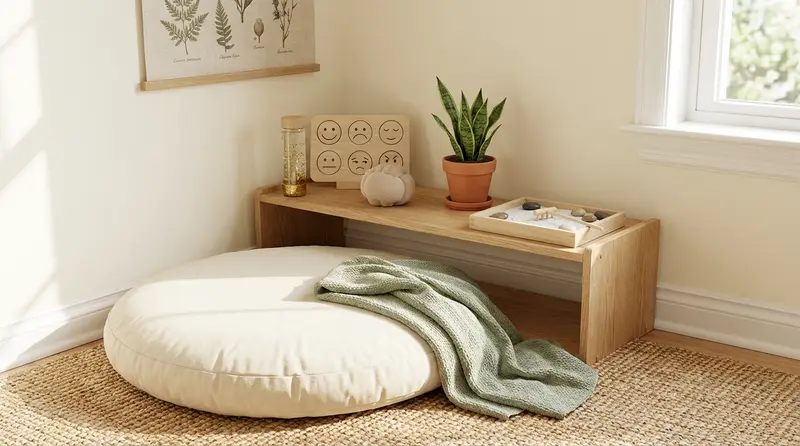
The bed is only one part of the system. The room is the other part.
If you are earlier in the setup process, start with our Montessori floor bed guide and Montessori toddler wardrobe guide so the whole bedroom supports independence, not just sleep.
A beautiful low bed in a cluttered, unsafe, overstimulating room is not especially Montessori. It is just low furniture.
On the other hand, a simple, calm setup that your child can use well is often exactly right, even if it is not Pinterest-perfect.
That is why the best Montessori bed choice depends on four things:
- your child’s age and mobility
- how prepared the room is
- how much sleep freedom you actually want right now
- whether the setup helps your child rest instead of launching bedtime negotiations
Takeaway: stop looking for the “most Montessori” bed. Look for the bed that best fits your child, your room, and your real life.
Floor bed vs toddler bed vs house bed: the honest difference
Here is the short version before we go deeper:
| Bed type | Best for | Main strength | Main drawback |
|---|---|---|---|
| Floor bed | Families who want the simplest low-access option | Lowest height, cheapest, visually open | Puts more responsibility on room setup |
| Toddler bed | Families who want clear sleep boundaries with easy access | Feels more “bed-like” and often easier for transitions | Still needs a fully safe room |
| House bed | Families who like the low-bed idea but also want a styled frame | Can feel cozy and inviting | Often solves decor, not function |
| Bed type | Room must already have | Watch out for |
|---|---|---|
| Floor bed | Full childproofing, anchored furniture, boring sleep zone, controlled cords and outlets | Too much freedom before the room is ready |
| Toddler bed | Clear path in and out, soft landing area, simple bedtime routine, familiar sleep cues | Treating the bed rail as a substitute for room safety |
| House bed | Enough floor space, sturdy frame, calm styling, child who respects climbing limits | Buying a play structure when you needed a sleep space |
Now let’s break that down properly.
Floor bed
A floor bed is usually just a firm mattress on the floor, or a mattress on a very low slatted base.
This is the classic Montessori-inspired setup because it gives your child direct access with almost no barrier. It is simple, calm, and easy to understand.
It works especially well when you want:
- the lowest possible fall risk
- easy access for a mobile baby or toddler
- a minimal room
- a setup that does not cost much to try
But the trade-off is real.
Once your child can get out of bed, the room becomes the container. Not the bed.
That means the floor bed is only as good as the room around it.
Toddler bed
A toddler bed is the middle path.
It still sits low enough for independent access, but it creates a clearer sleep zone. For some children, that visual cue helps. They can see where the bed begins and ends. For some parents, it also feels more emotionally manageable than a plain mattress on the floor.
A toddler bed often makes sense when:
- you are moving from a crib and want the next step to feel familiar
- your child benefits from a more defined sleep boundary
- you want independence without the full openness of a mattress on the floor
- you want something easier for grandparents or other caregivers to understand instantly
This is why many families quietly do better with a low toddler bed than with a purist floor mattress, and honestly, that is fine.
House bed
A house bed is basically a style variation of a low bed.
Sometimes it is just a low frame with a roof shape. Sometimes it is more decorative and dramatic. Occasionally it is so elaborate that it starts looking like a tiny woodland Airbnb.
A house bed can work well if:
- it is still low and easy to enter independently
- the frame is sturdy and not climb-inviting
- the room is calm enough that the bed still reads as a sleep space
But here is the honest catch.
A house bed is not more Montessori because it has a cute roof.
In some rooms, the frame adds warmth and coziness. In others, it becomes one more thing to climb, hang from, decorate, or argue about at bedtime.
Takeaway: floor bed is the simplest, toddler bed is the clearest transition, and house bed is mostly an aesthetic choice layered on top of those same principles.
Which Montessori bed works best by age?
There is no single perfect transition age, but there are a few very normal windows.
0 to 12 months
This is where safety needs the most honesty.
Mainstream safe-sleep guidance still leans toward approved infant sleep surfaces like a crib, bassinet, portable crib, or play yard. That is the most conservative path.
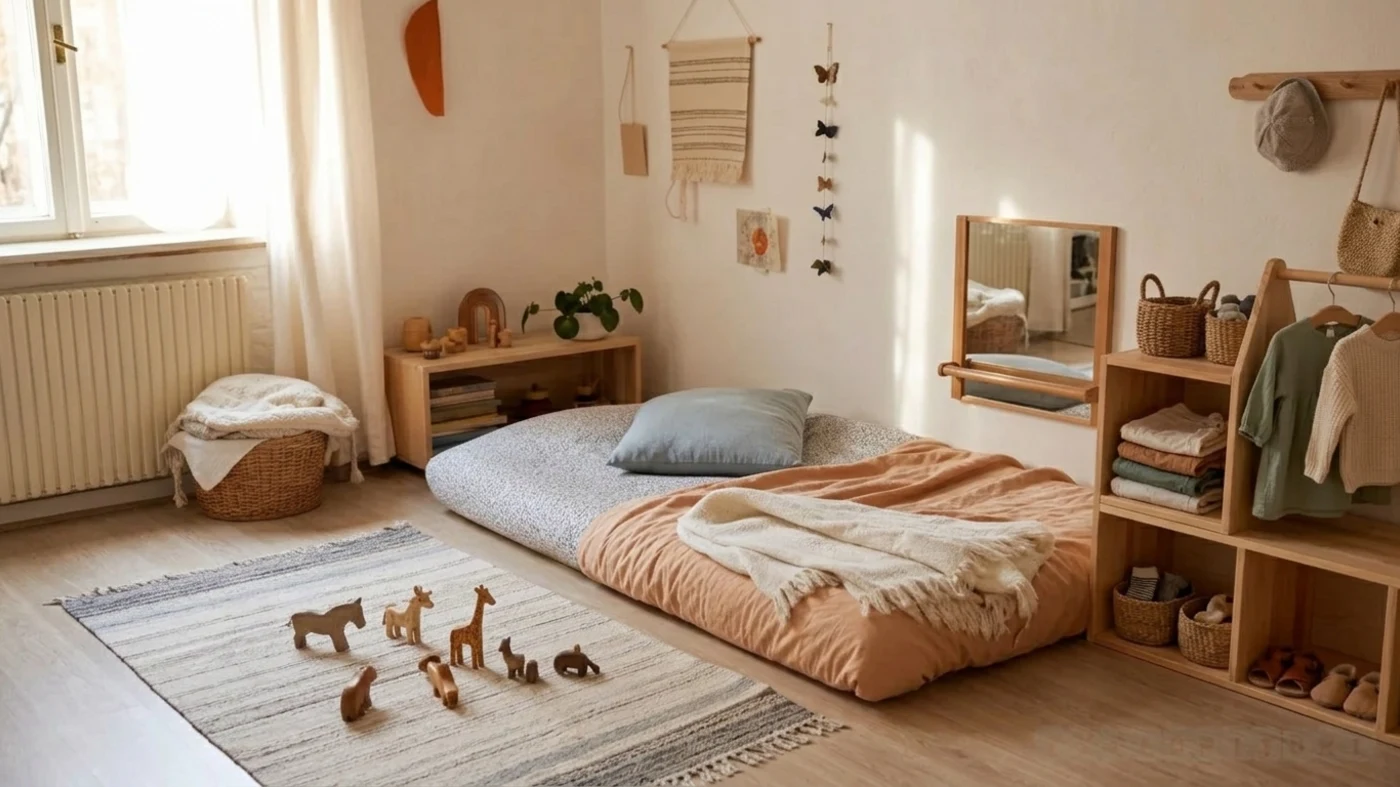
Some Montessori families do use a floor bed in the first year. If you go that route, you are taking on more environmental responsibility, and the room setup needs to be extremely solid.
For many families, the simplest truth is this: you do not need to prove your Montessori commitment with an infant floor bed.
A crib or bassinet is not anti-Montessori.
If your child is under 12 months, use conservative safe-sleep rules as your baseline: a firm flat sleep surface, fitted sheet only, no loose blankets, no pillows, and no soft objects in the sleep space. Montessori independence is not more important than infant sleep safety.
12 to 24 months
This is one of the most common transition windows.
Your child is moving independently, understands routines better, and is often ready for more freedom. A floor bed or low toddler bed can both work beautifully here.
If your child is very active and your room is carefully prepared, a floor bed can be a great fit.
If your child does better with a stronger sleep cue, or if you want the transition to feel a little more structured, a toddler bed often wins.
2 to 4 years
At this age, the conversation shifts.
The biggest issue is usually not whether your child can use a low bed. They can. The issue is whether the room helps bedtime stay calm.
A low twin bed, toddler bed, or simple floor-level frame can all work well here. House beds also become more realistic at this age because your child can understand boundaries better, though some children still treat them like indoor monkey bars.
4 years and beyond
At this point, the best choice is mostly about longevity, room flow, and family preference.
If your child already sleeps well in a low accessible bed, there may be no reason to change quickly.
Takeaway: the younger the child, the more the decision is about safety and room readiness. The older the child, the more it becomes about routine, room design, and sleep behaviour.
The part parents underestimate: the room matters as much as the bed
This is where most bed guides get weirdly shallow.
They compare frames, not environments.
But in Montessori sleep, once your child has an accessible bed, the room is doing a lot of the work the crib used to do.
That means you need to think in terms of a yes-space.

Ask yourself:
- Is all heavy furniture anchored?
- Are cords, outlets, and blind pulls fully handled?
- Could your child wake up and move safely without help?
- Is the sleep area visually calm?
- Are toys limited enough that the room still says “sleep” more than “party”?
That last one matters more than people think.
If the bed sits beside a giant toy shelf, bedtime can turn into choice paralysis very quickly. A room with low access does not need to become a free-for-all.
It should still feel legible. The same principles from Montessori shelf setup and Montessori toy rotation apply here: fewer choices, clearer access, easier reset.
If you are building the wider room at the same time, pair this guide with how to start Montessori at home, IKEA Montessori hacks, and Montessori on a budget for small spaces. Those guides help keep the bed decision inside the bigger prepared-environment question, which is usually where the real wins are.
The 10-minute room-readiness checklist
Before buying a bed, stand in the room and run this check from your child’s eye level.
| Check | Ready sign | If not ready yet |
|---|---|---|
| Furniture | Dressers, shelves, and bookcases are anchored | Keep the crib or current bed while you anchor furniture |
| Cords and outlets | No reachable blind cords, charging cables, lamps, or exposed outlets | Remove, shorten, cover, or reroute before adding bed freedom |
| Door strategy | You know whether the door stays open, closed, gated, or monitored | Decide this before the first night, not during a 2 a.m. negotiation |
| Sleep zone | Bed area is visually boring and easy to reset | Move most toys to a play shelf outside the sleep zone |
| Wake-up choices | One or two quiet options, usually books or a soft toy for older toddlers | Skip full toy shelves in the bedroom until sleep is steady |
| Caregiver clarity | Any adult can understand the setup quickly | Choose the simpler bed if the room needs explaining |
If two or more rows are still weak, the best next step is usually room preparation, not a different bed frame.
A few practical things that often help:
- a low frame with airflow, like this natural wood boat-style Montessori bed, if you want the floor-bed idea without putting the mattress directly on the floor
- a safe mirror in the play area, not the sleep zone, such as this unbreakable Montessori wall mirror with pull-up bar
- one or two very quiet wake-up choices, like books or a single simple puzzle such as the Melissa & Doug Jumbo Knob Puzzle, rather than a whole shelf of stimulating toys
That is the real Montessori move: not buying more bed decor, but making the environment readable.
Takeaway: if the room is not ready, the bed is not ready.
When a floor bed is the best choice
A floor bed is probably your best option if you want the cleanest expression of Montessori sleep without spending much.
It tends to shine when:
- your child is already mobile
- you want a very low fall risk
- your room is simple and easy to childproof well
- you are comfortable with the idea that your child may get in and out of bed for a while during the transition
- you prefer minimal furniture and a visually calm room
A floor bed can also be the most flexible setup in a small room. It has the lowest visual footprint, and it is easy to adapt as your child grows.
But it is not automatically the best option for every temperament.
Some children treat the freedom beautifully. Others use it to discover the spiritual joy of wandering the room at dawn.
That is not failure. It just means you may need stronger routine boundaries, or a slightly more defined setup.
A practical version many families like is a low slatted frame instead of a mattress directly on the floor. It preserves the accessible feel while improving airflow and reducing mould risk. The boat-style Montessori frame we already use is a good example of that middle ground.
If the wandering is mostly a routine problem, the bed may not be the fix. A simple picture rhythm from Montessori routine cards for toddlers can make the evening sequence more predictable without adding more furniture.
Takeaway: choose a floor bed when simplicity, openness, and low access are the main goal, and when you are prepared for the room to carry more of the safety burden.
When a toddler bed is the smarter choice
This is the most underrated option, honestly.
A low toddler bed can be a better real-life fit than a floor mattress because it gives your child a clearer visual cue and gives you a cleaner transition from crib life.
That matters if your child:
- likes boundaries and predictability
- is sensitive to environmental change
- keeps rolling off a plain mattress
- has just left a crib and seems to need a stronger “this is where sleep happens” signal
A toddler bed is also easier to explain to other adults.
That sounds trivial, but it is not. If grandparents, babysitters, or a co-parent are helping with bedtime, the setup should be intuitive.
Montessori should not create a house system only one adult understands.
The other reason toddler beds are useful is emotional. Some parents want their child to have independence, but a bare mattress on the floor still feels too abrupt. A toddler bed can offer the same principle in a format that feels more settled.
That is a perfectly valid reason to choose it.
Toddler beds also pair well with practical bedroom independence: a low hook, two pajama options, and a small laundry basket often matter as much as the bed. If that is the direction you are going, the Montessori toddler wardrobe guide and dressing skills guide are useful next reads.
Takeaway: if a floor bed feels a bit too open, a low toddler bed often gives you the same developmental benefits with less friction.
When a house bed is worth it — and when it is not
A house bed can absolutely work.
But it only earns its keep if it makes the room better, not busier.
A good house bed:
- stays low enough for independent use
- feels cozy without becoming stimulating
- has sturdy construction and safe spacing
- does not invite constant climbing or hanging
A not-so-good house bed usually has one of two problems.
Either it is mostly decorative and overpriced.
Or it turns the bed into a play structure.
That is where families get disappointed. They wanted a calm Montessori room and accidentally bought the emotional energy of a bunk bed without the second bunk.
If you genuinely love the look, and your child is the kind of child who will leave it alone at bedtime, fine. Go for it.
But if you are on the fence, I would not treat the house shape as the deciding factor. Put that budget into a better mattress, better blackout curtains, safer room anchoring, or a simpler bedroom layout first.
Those things matter more than a roofline.
Takeaway: a house bed is only worth it when it supports the room. If it adds stimulation, it is solving the wrong problem.
How to choose the right option for your family
If you are still stuck, use this quick filter.
Choose a floor bed if you want:
- the simplest and lowest setup
- minimal cost and minimal furniture
- the classic Montessori-inspired option
- a calm room that is already easy to childproof
Choose a toddler bed if you want:
- a clearer transition from crib to independent sleep
- stronger visual sleep boundaries
- a setup that feels intuitive to every caregiver
- low access without quite as much openness
Choose a house bed if you want:
- a low bed plus a specific cozy look
- a child who is unlikely to treat the frame like a climbing gym
- a room where the bed frame will not visually overwhelm the space
And do not forget the non-bed questions:
- Is the room actually prepared?
- Is the mattress firm and age-appropriate?
- Does the space feel calm at bedtime?
- Are you choosing for function or just for photos?
If you answer those honestly, the right option usually becomes much clearer.
The quick decision matrix
| Your real priority | Best first choice | Why |
|---|---|---|
| Lowest height and simplest setup | Floor bed | It gives access without extra furniture or visual weight |
| Easiest crib transition | Toddler bed | It keeps the familiar “bed” boundary while lowering access |
| Small room or tight budget | Floor bed or very low slatted frame | It avoids spending on a decorative frame before you know what works |
| Shared caregivers | Toddler bed | It is the easiest option for grandparents, babysitters, or co-parents to read instantly |
| Styled room that still feels calm | Simple low house bed | It can work if the frame stays boring enough for sleep |
| Child climbs everything | Floor bed or plain toddler bed | Skip tempting roof frames until boundaries are steadier |
| Parent is nervous about too much freedom | Toddler bed plus prepared room | It offers independence with a clearer sleep cue |
The matrix is intentionally practical. The best Montessori choice is the one your child can use calmly and your household can maintain consistently.
What we would prioritise before buying anything fancy
If your budget is limited, this is where I would put the money first:
- Safety prep — anchors, outlet covers, cord management, door strategy
- A solid mattress — comfort and firmness matter more than the bed shape
- A simple low setup — often enough on its own
- Room calm — less clutter, fewer wake-up temptations, better flow
- Only then the decorative extras
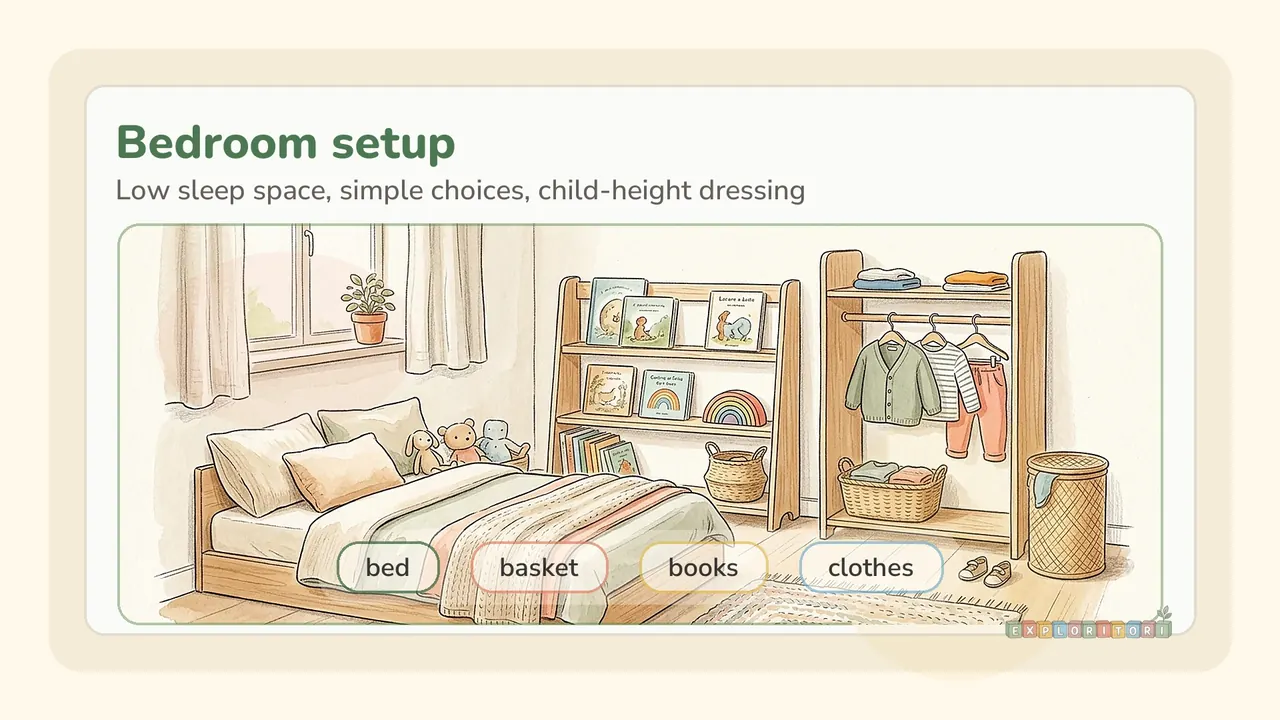
For many families, a low bed frame plus a calm room is enough. If you want a practical frame, the natural wood Montessori bed with slats is the kind of product that makes more sense than a highly themed frame because it solves a real problem: airflow and easy access.
And if you are building out the wider bedroom, a safe Montessori wall mirror with pull-up bar can be excellent in the movement or dressing area, especially for younger toddlers. Just keep it out of the sleep zone so the bed area stays boring in the best way.
That is the real north star here.
Not prettier.
Calmer.
More usable.
More independent.
Methodology and trust notes
This is a practical comparison guide, not a medical sleep plan or a product lab test. We reviewed the common Montessori home setups families search for, compared how each option changes room safety and bedtime independence, and prioritised guidance that parents can check in their own home before buying anything.
For infant sleep safety, use conservative guidance from your paediatrician and recognised safe-sleep sources such as the American Academy of Pediatrics or your local public-health service. For furniture anchoring and room safety, start with the CPSC anchor-it guidance. Product links may be affiliate links, but the core recommendation here is not “buy a specific bed”; it is prepare the room first, then choose the simplest bed that supports sleep.
FAQ
Is a floor bed more Montessori than a toddler bed?
No. A floor bed is the classic Montessori-inspired image, but a toddler bed can be just as aligned with Montessori if it stays low, supports independence, and sits inside a properly prepared room.
Are house beds actually Montessori?
Sometimes. The house shape itself is not the Montessori part. What matters is whether the bed is accessible, calm, safe, and helpful for sleep. If the frame adds too much stimulation, it works against the goal.
When should I move from a crib to a Montessori bed?
There is no perfect age. Many families transition sometime between 12 and 24 months, while some move earlier and others wait until crib climbing becomes the issue. Room readiness and safety matter more than ideology.
Is a mattress on the floor safe?
It can be, but the safety burden shifts to the room. For infants especially, mainstream safe-sleep guidance is more conservative and usually points families toward approved infant sleep spaces. For older babies and toddlers, a fully prepared room becomes essential.
What is the biggest mistake parents make with Montessori beds?
Treating the bed like the whole decision. In reality, the bigger issue is usually whether the room is safe, calm, and readable enough for the amount of freedom the bed allows.
 Get weekly Montessori tips
Honest reviews, activity ideas, and budget-friendly picks — no spam, just what works.
Subscribe Free